The Public Perspective (Voices from the Ground)
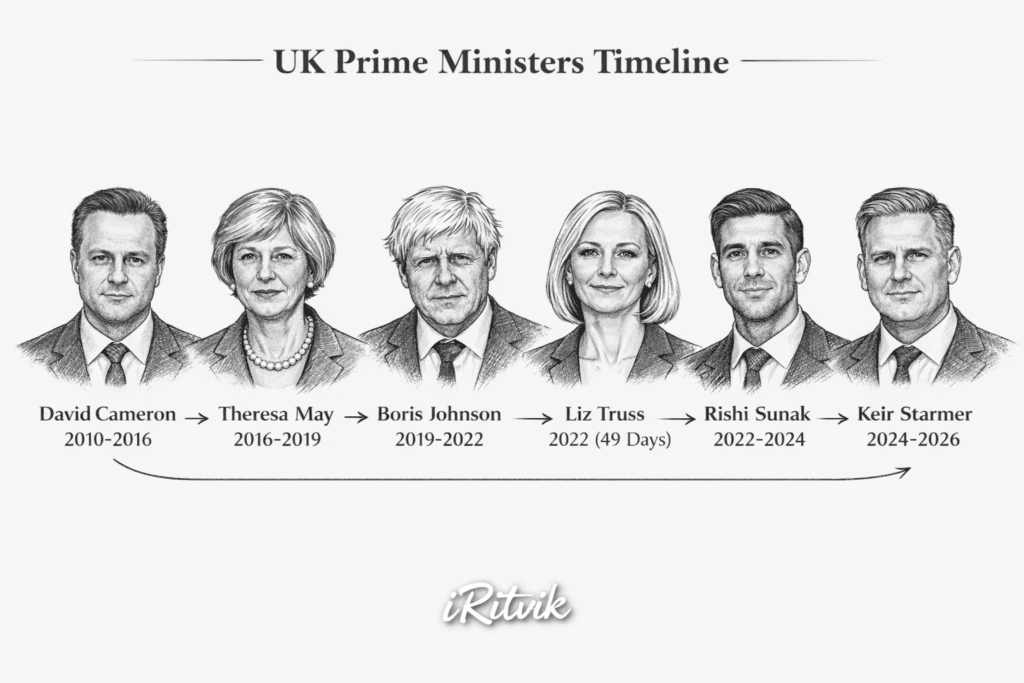
Have you noticed any strange patterns in United Kingdom politics over the past decade? The United Kingdom has seen six different Prime Ministers in the past ten years. This reflects significant political instability in the UK. We asked eight Quora users for their views to help us understand why it’s so difficult for leaders to remain in office.
1. The Impact of History and Media
Lili (Cultural Historian) explains that changing leaders is nothing new; it even happened in the 19th century. However, she points out that social media now spreads public opinion very quickly, making it difficult for political parties to remain united. Georgina Davies agrees, saying that social media easily sways voters. Elif D’Wulfe adds that foreign funding and a lack of clear media regulations contribute to this instability.
2. Incompetence and Political Failure Many users feel leaders have failed to do their jobs well:
- Chris Christoforou believes leaders are incompetent and do not care about the people who pay their wages.
- Peter Ingram says leaders lack clear plans and focus too much on people’s feelings rather than reality, which leads to micromanagement.
- Gary Braithwaite suggests that politicians now focus more on staying in power through “stage management” and soundbites rather than doing the actual work.
3. A Review of Recent PMs Ian Leach breaks down the performance of recent leaders:
- David Cameron: He grew up with privilege and struggled when people told him “no.”
- Theresa May: She appeared weak and allowed EU negotiators to bully her.
- Boris Johnson: The public liked his promise to “get Brexit done,” but the establishment pushed him out using negative media stories.
- Liz Truss: She had poor communication skills, which caused the financial sector to lose faith in her.
- Rishi Sunak: He worked hard, but voters were already tired of his party.
- Keir Starmer: He makes many promises but often fails to deliver.
Decoding the Political Exodus (A Historical Analysis)
Ian Leach’s opinion is interesting — let’s examine these ideas based on what actually happened, historically.
- David Cameron (2010-2016): He resigned after the Brexit referendum result, as he could not bridge the divide in his party and the country.
- Theresa May (2016-2019): She faced a deadlock over Brexit, and Parliament rejected her withdrawal agreement multiple times.
- Boris Johnson (2019-2022): Scandals like “Partygate” and a loss of support from his own ministers forced him out.
- Liz Truss (2022- 49 days): Her “mini-budget” caused market panic, leading her party to lose confidence in her within just 49 days.
- Rishi Sunak (2022- 2024): He faced a long period of public frustration with his party, which made winning the election nearly impossible.
- Keir Starmer (2024-2026): His biggest struggle is the gap between the promises he made and the results he has delivered so far.
The Systemic Pattern—”The Trap of Performative Governance”
Why does UK political instability keep happening? It follows a clear cycle:
- High Expectations: Leaders enter office as “fixers” who rely on media narratives rather than realistic goals.
- Implementation Gap: They quickly face the realities of the budget and bureaucracy, making their original promises hard to keep.
- Policy Paralysis: Trying to please everyone often means leaders take no strong action at all.
- Survival Strategy: When a party fears losing the next election, they replace the leader to show voters a “fresh face.”
What strikes me about this cycle is that it’s almost like it’s been playing itself out for a decade — each stage builds on the previous one, and no leader seems to have figured out how to break the pattern.
The X Factor—Digital Destabilization
External forces and social media now play a major role in destabilizing UK politics:
- Selective Outrage: Selective Outrage: If you spend time on X (formerly Twitter), it’s hard not to notice how selectively some high-profile influencers — including Elon Musk — choose which countries’ problems to spotlight, often exaggerating issues in the UK while remaining silent on similar problems elsewhere.
- Weaponizing Chaos: Foreign actors use algorithms to amplify anger, which makes political stability much harder to maintain.
- Democratic Erosion: Campaigns funded by foreign interests and a lack of media regulation make it difficult for any elected government to focus on their work.
Conclusion: Decoding the Core Difficulty
The road ahead for the UK looks difficult – and from my perspective, the more I think about it, the more I feel like politics has become a matter of “content consumption” rather than true governance. Leaders are constantly falling short of public expectations, and one key factor we’ve seen is the constant pressure from an aggressive media. Until this changes, the “revolving door” at Number 10 will likely remain a hallmark of modern British politics.
Disclaimer
This article is based on a synthesis of diverse public opinions collected from Quora users and a historical analysis of recent political events in the United Kingdom. The views expressed by the cited users are their own personal perspectives and do not necessarily reflect the views of the author or this platform. While we have made every effort to present a balanced analysis, political events are complex and subject to multiple interpretations. This content is intended for informational purposes only and should not be considered professional political, historical, or financial advice.