
The “Islamabad Memorandum of Understanding” (MoU) is being sold as a historic path to peace. However, a deep dive into its 14 clauses reveals a much darker reality. For American voters who were promised “Peace through Strength,” this agreement is not a diplomatic triumph; it is a surrender of U.S. interests and a betrayal of the public trust.
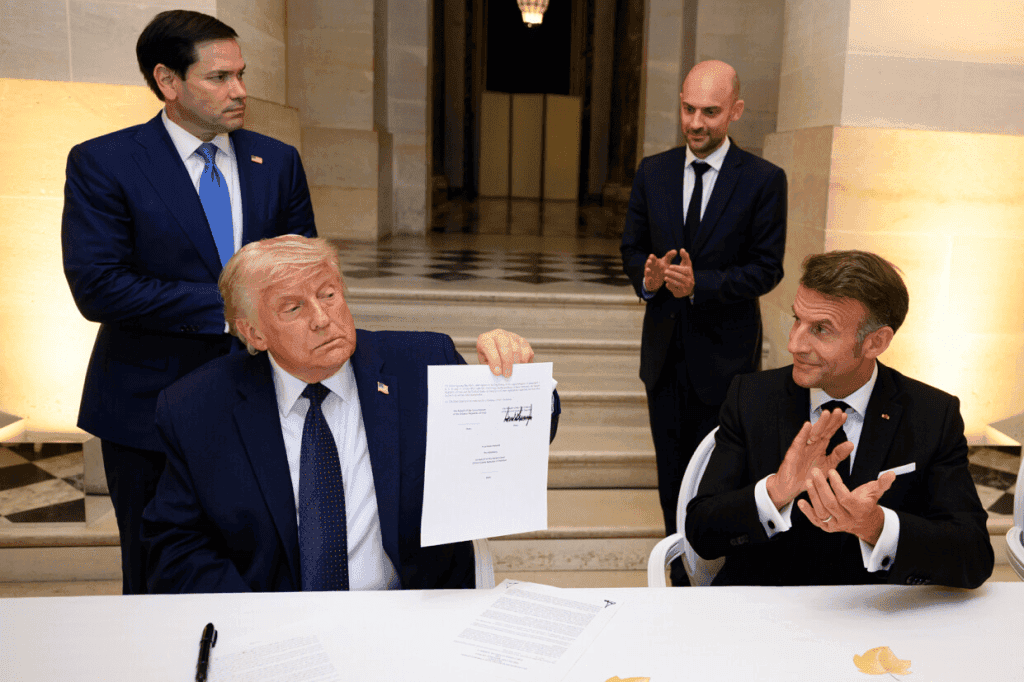
The agreement begins with Clause 1, which promises a permanent end to military operations. Yet, this is already failing. Recent statements from Iranian officials claiming “strategic victory” and Prime Minister Benjamin Netanyahu’s firm refusal to back down show that neither side is committed to this ceasefire.
It is a hollow promise that will be broken at the first sign of conflict. Clauses 2 and 3 add to this illusion by setting an unrealistic 60-day deadline, which serves only to create false hope rather than solving decades of deep-rooted regional disputes.
The military and economic concessions are where the deal truly falls apart.
Clauses 4 and 5 demand that the U.S. dismantle its naval blockade in just 30 days. In exchange, we receive only a vague promise from Iran to use “best efforts” to keep shipping lanes open. We are effectively throwing away our most powerful military defense before even seeing if Iran intends to keep its word.
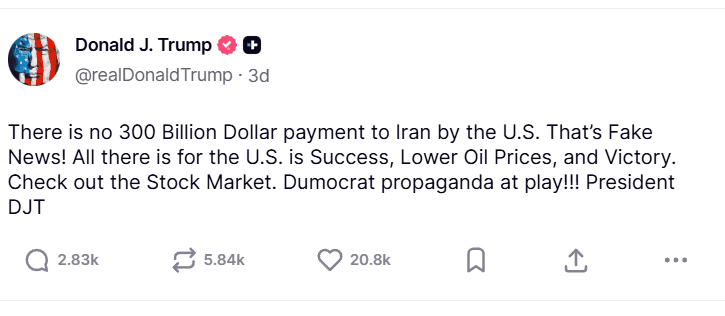
Clause 6 is perhaps the most shocking and controversial part of the deal. The MoU legally commits the U.S. to a massive $300 billion reconstruction plan for Iran.
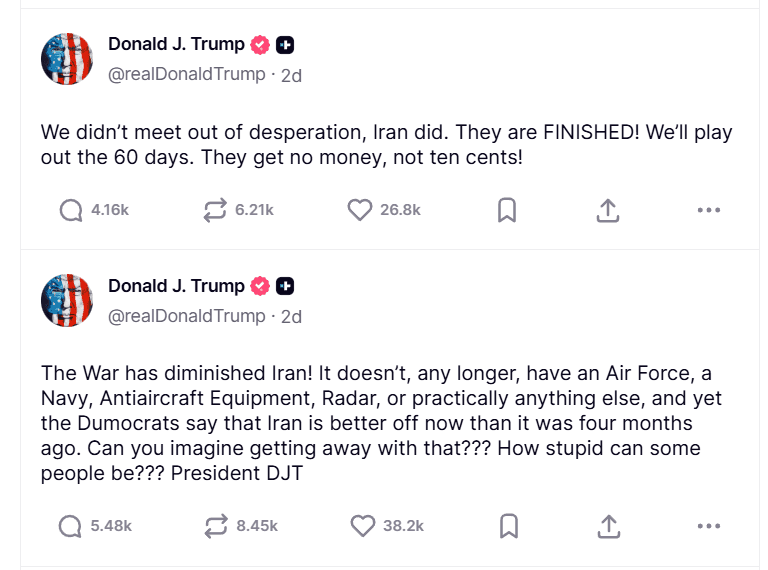
This stands in direct and blatant contradiction to President Trump’s statements on his social media platform, Truth Social, where he emphatically declared:
They get no money, not ten cents!
This gap between the formal written agreement and the President’s public rhetoric is a massive deception. It forces voters to ask: is the signed document a lie, or is the President’s promise to his supporters just for show? Furthermore,
Clauses 7, 10, and 11 act as an immediate economic lifeline, granting oil waivers and releasing frozen assets before a final deal is even reached. By handing over these benefits upfront, the U.S. has completely surrendered its bargaining power.
The nuclear issue, addressed in Clause 8, is equally dangerous.
By allowing “on-site down-blending” of nuclear material, the deal lets Iran keep its nuclear infrastructure and knowledge intact. This is not disarmament; it is merely waiting for the day the deal expires so they can restart their weapons program.
Clauses 9, 12, and 13 further tie the hands of the U.S. military by limiting force deployment and creating a bureaucratic maze of “negotiation” that traps the U.S. into a cycle of endless concessions.
Finally, Clause 14’s reliance on a binding UN resolution creates a legal trap that will prevent future U.S. administrations from holding Iran accountable.
In conclusion, this MoU is not a step toward peace; it is a blueprint for failure. It prioritizes short-term political optics over long-term national security. By giving everything away to a regime that has spent years challenging the U.S., this deal places American credibility and Middle Eastern stability at extreme risk. It is time to call it what it is: a failed strategy that is failing the American people.
Frequently Asked Questions
It is a 14-point diplomatic framework established between the United States and the Islamic Republic of Iran, aimed at outlining terms for regional de-escalation, sanctions relief, and nuclear material management.
Clause 6 outlines a substantial $300 billion reconstruction plan for Iran, which directly contradicts public statements made by President Trump on Truth Social where he declared, “They get no money, not ten cents!”
No, critics argue that by permitting “on-site down-blending,” the framework allows Iran to maintain its core nuclear infrastructure and technical knowledge intact rather than achieving full disarmament.
Clauses 4 and 5 require the U.S. to dismantle its naval blockade within 30 days. In exchange, the U.S. receives only a vague commitment from Iran to use “best efforts” to keep regional shipping lanes open.
Clause 14 relies on a binding UN resolution, creating a legal trap that could restrict future U.S. administrations from independently holding Iran accountable or modifying enforcement strategies without international obstacles.
Source Link:
- Official Text of the MoU: “The full text and framework of the 14-point memorandum can be verified here: Arab Center Washington DC – Memorandum of Understanding between the United States of America and the Islamic Republic of Iran“
- Trump’s Statement on Truth Social: “President Trump’s official denial regarding the payments as posted on Truth Social (June 19, 2026): Iran International – Trump denies payment claims in Iran deal“
- Analysis of the Deal’s Contradictions: “For a detailed breakdown of the clauses and the ongoing diplomatic inconsistencies, see the analysis by Middle East Eye: Middle East Eye – US-Iran peace deal: Six things we learned from the Islamabad MoU“










[…] You May Like : Islamabad MoU Exposed: Is the Iran-U.S. Deal a Failure? […]
[…] The “Islamabad Memorandum of Understanding” (MoU) is being sold as a historic path to peace. However, a deep dive into its 14 clauses reveals a much darker reality. For American voters who were promised “Peace through Strength,” this agreement is not a diplomatic triumph; it is a surrender of U.S. interests and a betrayal of the public trust. Read the Full Analysis : https://iritvik.com/islamabad-mou-failure-analysis/ […]
[…] The “Islamabad Memorandum of Understanding” (MoU) is being sold as a historic path to peace. However, a deep dive into its 14 clauses reveals a much darker reality. For American voters who were promised “Peace through Strength,” this agreement is not a diplomatic triumph; it is a surrender of U.S. interests and a betrayal of the public trust. (Image cr: Trump’s Social Media Truth account) Read Full Analysis Here: https://iritvik.com/islamabad-mou-failure-analysis/ […]