History doesn’t always create winners and losers. Sometimes it creates neighbours who remember the same past very differently.
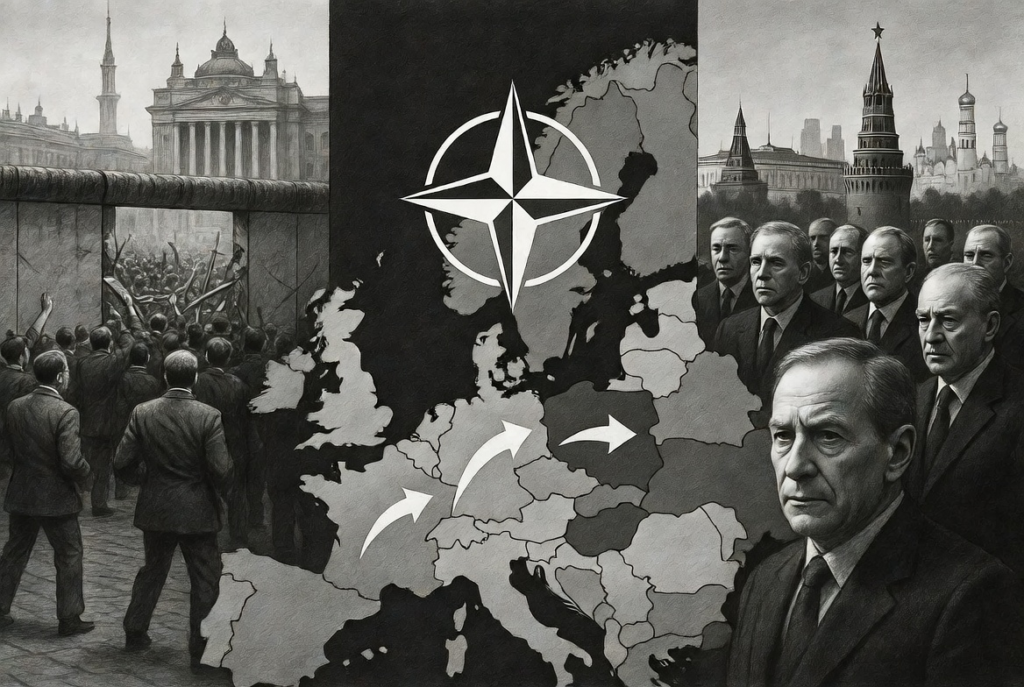
In the previous chapter of our Russia–Ukraine Conflict Decoded series, we explored why Ukraine chose to give up the world’s third-largest nuclear arsenal under the Budapest Memorandum. While that decision reflected hopes for a more peaceful Europe, another historic development was already underway. NATO expansion eastward was gradually reshaping Europe’s security landscape, triggering new opportunities for some countries and growing concerns for others.
For a while, that optimism seemed justified.
The Soviet Union had collapsed. Former rivals were negotiating instead of confronting each other. Across Europe, there was a growing belief that cooperation—not military rivalry—would shape the decades ahead.
Yet beneath that optimism, another debate was quietly gathering momentum.
It wasn’t about nuclear weapons anymore.
It was about security.
More specifically, it was about who would guarantee Europe’s security in a world where the Soviet Union no longer existed.
That question produced very different answers depending on where you lived.
For many countries in Central and Eastern Europe, joining NATO looked like the safest path toward protecting their newly regained sovereignty.
For many Russian leaders, the same development looked increasingly difficult to accept.
Before we examine why Moscow objected, we first need to understand why so many of its neighbours wanted to join the alliance in the first place.
Because history makes far more sense when we understand the fears—and the hopes—of everyone involved.
A Military Alliance Without an Enemy?
When NATO was founded in 1949, its purpose was clear.
Western Europe was emerging from the devastation of the Second World War, while relations with the Soviet Union were deteriorating rapidly. Many governments feared that another conflict could erupt on the continent, and they believed that collective defence offered the best chance of preventing one.
For the next four decades, NATO and the Warsaw Pact stood on opposite sides of the Cold War.
Then, almost unexpectedly, one side disappeared.
By the end of 1991, the Warsaw Pact had dissolved, and the Soviet Union itself had ceased to exist.
That naturally raised a question.
If the Cold War was over, did NATO still have a reason to exist?
It wasn’t an unreasonable question.
Politicians debated it.
Academics wrote about it.
Newspapers across Europe discussed whether the alliance had fulfilled its original mission.
Looking back today, it may seem obvious that NATO would continue.
At the time, however, the future of the alliance was far from certain.
History Check
Did NATO continue because it wanted a new enemy?
The historical record doesn’t support such a simple conclusion.
After the Cold War, NATO began redefining its role rather than preparing for another confrontation with Russia. Official documents from the 1990s emphasized crisis management, partnership programs with former Soviet states and the promotion of stability across Europe. At the same time, critics argued that the alliance’s continued expansion would inevitably affect Russia’s security calculations.
Both of those discussions shaped the years that followed.
The Requests Didn’t Begin in Washington
One of the most common misconceptions about NATO enlargement is that it began as an American plan to move the alliance eastward.
The historical record tells a more nuanced story.
The earliest momentum came from the countries that had spent decades inside the Soviet sphere of influence.
Poland.
Hungary.
The Czech Republic.
These countries weren’t waiting for invitations.
They were actively seeking membership.
To understand why, we need to set aside today’s political debates for a moment and go back to how the early 1990s felt inside those countries.
For people in Western Europe, the Cold War was ending.
For many people in Central Europe, history still felt uncomfortably close.
Soviet influence wasn’t a distant memory.
It had shaped careers, education, media, elections and military policy within living memory.
Many citizens had experienced censorship.
Others remembered Soviet troops stationed in their countries.
Political leaders remembered making national decisions under the shadow of Moscow’s influence.
When those countries finally regained the freedom to choose their own foreign policy, they faced a question their parents and grandparents had rarely been allowed to ask.
How do we make sure we never lose this independence again?
For many governments, NATO appeared to offer one answer.
Not the only answer.
But a powerful one.
Pause & Think
Imagine you’re the Prime Minister of Poland in 1993.
Your country has only recently regained full control over its own foreign policy.
Russia is no longer the Soviet Union, and many people genuinely hope cooperation will continue.
But hope isn’t a defence strategy.
Would you leave your country’s future to optimism?
Or would you seek membership in an alliance that promises collective security—even if doing so risks creating tension with your powerful neighbour?
There isn’t an easy answer.
But these were exactly the kinds of questions leaders across Central Europe were asking.
NATO Faced a Difficult Choice
By the mid-1990s, NATO found itself facing a question it had never encountered before.
Should a military alliance created during the Cold War remain exactly as it was?
Or should it open its doors to countries that had spent decades outside it?
The answer wasn’t obvious.
Supporters of enlargement argued that Europe had entered a historic moment. If newly independent democracies wanted to join institutions that promoted collective security and political cooperation, turning them away could leave a dangerous security vacuum in Central Europe.
Others were more cautious.
Some diplomats and scholars warned that expanding NATO too quickly could create unnecessary friction with Russia at a time when relations between Moscow and the West were still evolving. They feared that decisions intended to strengthen European security might also reshape Russia’s perception of its own security environment.
These concerns weren’t fringe opinions.
They were part of an active debate inside Western governments throughout the 1990s.
The question wasn’t whether Europe needed stability.
Everyone agreed that it did.
The disagreement was over how that stability should be achieved.
Partnership Before Membership
Contrary to a common assumption, NATO didn’t immediately begin admitting new members after the Cold War ended.
Instead, it first experimented with cooperation.
In 1994, NATO launched the Partnership for Peace (PfP) programme, inviting former Warsaw Pact countries and several former Soviet republics to build closer military and political ties with the alliance without becoming full members. Readers can explore the official programme through NATO’s Partnership for Peace overview.
The programme included joint military exercises, defence reforms and regular dialogue.
Importantly, Russia also joined the Partnership for Peace.
At the time, many policymakers hoped this framework could reduce mistrust and encourage cooperation across Europe rather than creating new divisions.
For some countries, however, partnership was never intended to be the final destination.
Governments in Poland, Hungary and the Czech Republic continued to pursue full NATO membership, arguing that political cooperation alone could not provide the long-term security guarantees they were seeking.
The conversation was gradually shifting from “Should NATO cooperate with Eastern Europe?” to “Should NATO expand?”
Perspective Box: One Decision, Different Expectations
By the second half of the 1990s, the debate looked very different depending on who was watching.
🇵🇱 Poland
For many Polish leaders, NATO membership represented a long-term investment in national security. Having regained the freedom to choose their own alliances, they wanted those choices protected by formal commitments rather than uncertain geopolitical expectations.
🇨🇿 Czech Republic & 🇭🇺 Hungary
Their governments saw membership as part of a broader return to European political and security institutions. NATO was viewed not only as a defence alliance but also as a symbol of democratic integration after decades of communist rule.
🇺🇸 United States
Many American policymakers believed that expanding NATO could help consolidate democratic transitions and reduce the likelihood of future instability in Central Europe. At the same time, debates continued within Washington about how enlargement might affect long-term relations with Russia.
🇷🇺 Russia
Many Russian officials viewed the discussion with increasing unease. Although the Soviet Union no longer existed, they questioned why a military alliance originally created to counter Moscow’s influence was now considering expansion toward Russia’s neighbourhood.
The same policy generated confidence in some capitals and concern in others.
That difference in perception would become increasingly important over the years that followed.
The First Expansion
After years of discussion, NATO made its decision.
In 1997, the alliance formally invited Poland, Hungary and the Czech Republic to begin the accession process. The official declaration is available in the Madrid Declaration (1997).
Two years later, in March 1999, all three officially became NATO members.
For those countries, it marked the end of one historical journey and the beginning of another.
After decades behind the Iron Curtain, they had joined a security alliance they believed would help safeguard their independence.
Across much of Central Europe, the decision was celebrated.
Elsewhere, it was watched far more cautiously.
The enlargement itself was peaceful.
Its long-term geopolitical consequences, however, would remain the subject of intense debate.
History Check
Did Eastern European countries join NATO because they were forced to?
The available historical evidence suggests otherwise.
Countries such as Poland, Hungary and the Czech Republic formally applied for membership after decisions made by their elected governments. NATO evaluated those applications through political dialogue, defence reforms and accession negotiations before admitting them.
This does not settle the broader debate over whether enlargement was strategically wise or how it affected Russia’s security perceptions.
It simply clarifies an important historical point:
The desire for membership originated within the applicant countries themselves, not as a policy imposed upon them by NATO.
Why This Still Matters
The first wave of NATO enlargement did more than change the alliance’s map.
It changed how different parts of Europe imagined their future.
For many Central European countries, membership represented stability after decades of uncertainty.
For many Russian leaders, it marked the beginning of a new strategic reality that they believed required closer attention.
Those two perspectives did not immediately lead to confrontation.
But they did create a growing disagreement over the future of European security—one that would become increasingly difficult to ignore.
History doesn’t always turn on a single event. Sometimes it changes because different countries begin telling themselves very different stories about the same moment.
In the next article, we’ll examine one of the most disputed questions of the post-Cold War era: Did the West promise not to expand NATO eastward—or is that one of history’s most misunderstood claims? That question has shaped diplomatic arguments for decades, and understanding it requires separating documented evidence from political narratives.
Frequently Asked Questions
NATO expanded eastward because several Central and Eastern European countries, including Poland, Hungary and the Czech Republic, actively sought membership after the Cold War to strengthen long-term security and protect their sovereignty.
During the first phase of NATO expansion eastward, Poland, Hungary and the Czech Republic became NATO members in 1999, followed later by other Central and Eastern European countries.
No. Historical evidence shows that NATO expansion eastward was driven by applications from sovereign governments who chose to apply, after which NATO evaluated each application.
Many Russian leaders argued that NATO expansion changed Europe’s security balance by bringing a military alliance closer to Russia’s borders, while NATO members maintained that every sovereign state has the right to choose its own security arrangements.
The Partnership for Peace (PfP), launched in 1994, created military and political cooperation between NATO and former Warsaw Pact countries. While separate from membership, it served as an important step for several countries that later joined.
The debate continues because supporters argue it strengthened European security, while critics believe it contributed to rising tensions between Russia and the West, leaving historians to continue debating its long-term geopolitical impact.
There is no single historical consensus. Most scholars agree the war resulted from multiple historical, political, and security factors, of which NATO expansion is one discussed aspect rather than the sole cause.
Editorial Note
This article is part of iRitvik’s Russia–Ukraine Conflict Decoded series. It has been prepared by reviewing historical documents, official records, academic research and reporting from established international news organizations. Where historians or policymakers differ in their interpretations, those differences have been acknowledged rather than presenting a single viewpoint as definitive. The objective of this series is to help readers understand the historical context, competing perspectives and evidence behind one of the most consequential geopolitical conflicts of the 21st century.