
The Russia–Ukraine War Didn’t Begin in 2022. It Began Long Before the First Missile Was Fired.
At 4:30 on the morning of 24 February 2022, most of Europe was asleep.
A few hours later, the world woke to images that many believed belonged to another century. Missiles struck military targets across Ukraine. Russian troops crossed the border from multiple directions. Long lines of civilian cars stretched toward Poland, Romania and Moldova as families packed whatever they could carry and left behind homes they never imagined they would abandon.
Within minutes, news channels across the world were carrying the same headline.
Russia had invaded Ukraine.
For millions of people, that was the beginning of the war.
For historians, diplomats and military analysts, it was something very different.
It was the moment when a crisis that had been building for years finally erupted into open warfare.
The explosions that morning were real.
But the story behind those explosions had started long before the first missile left its launcher.
That is where many discussions about this conflict go wrong.
Modern news often explains events from the day they happen. History rarely works that way. Major wars are not created in a single speech, a single election or a single military operation. They develop slowly. Political disagreements become diplomatic crises. Diplomatic crises become security disputes. Security disputes create mistrust. Over time, decisions made by different governments begin to shape events that nobody can fully control.
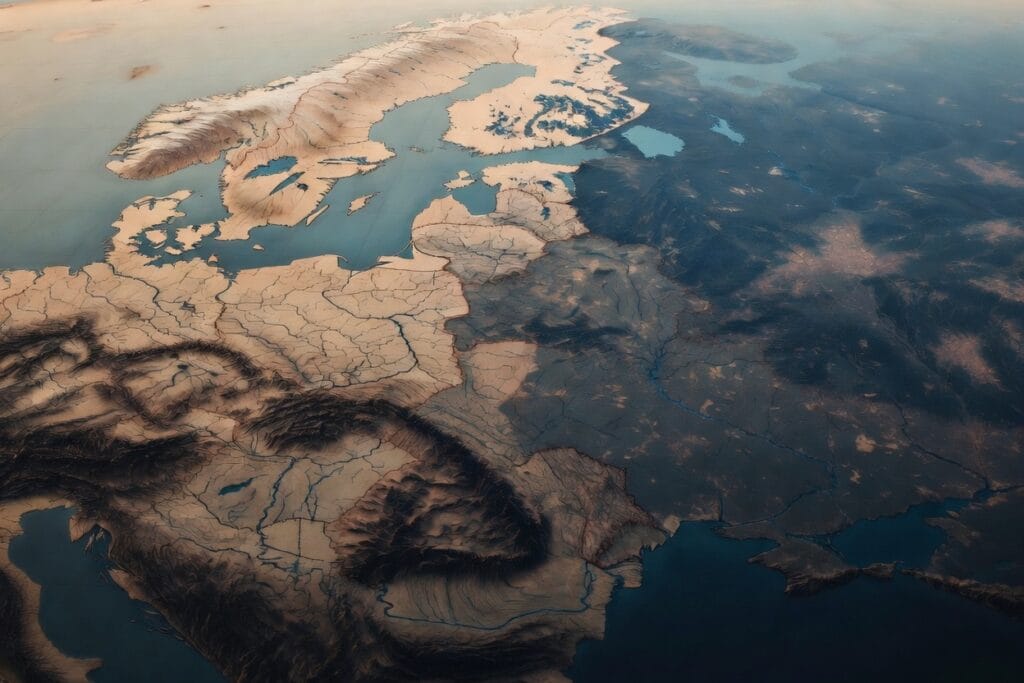
By the time soldiers appear on a battlefield, much of the story has already been written.
The Russia–Ukraine war is no exception.
Today, almost everyone has an opinion about this conflict.
Some describe it as an act of Russian aggression against a sovereign neighbour.
Others argue that years of geopolitical rivalry between Russia and the West made confrontation increasingly likely.
Some see it as a battle over national identity.
Others believe it is the latest chapter in a much larger struggle over Europe’s security architecture after the Cold War.
Each explanation highlights part of the truth.
None explains the entire picture on its own.
That is because this war cannot be understood through a single headline or a single political slogan.
It is a story shaped by history, geography, diplomacy, economics, military strategy and competing ideas about security.
Remove any one of those pieces, and the picture becomes incomplete.
That is exactly what this series is designed to avoid.
This is not a series about choosing sides.
It is not an attempt to prove that one government was right and another was wrong.
Instead, it is an attempt to understand how Europe reached its largest military conflict since the Second World War.
Doing that requires something modern news rarely has enough time to provide—context.
Before discussing tanks, missiles and sanctions, we first need to understand the relationship between Russia and Ukraine itself.
Looking at a map today, they appear to be two neighbouring countries separated by an international border.
History tells a much more complicated story.
For centuries, the people living across this region experienced changing borders, different rulers, shifting alliances and repeated wars. Entire generations were born under one flag and died under another without ever leaving the town where they had spent their lives.
Political borders changed.
Human connections often did not.
Even after both countries emerged as independent states in the modern era, millions of families continued to have relatives on both sides of the border. Businesses remained connected. Trade continued. Languages overlapped. Shared memories survived.
This complicated relationship is one of the reasons the conflict is so difficult to explain in simple terms.
Unlike many international disputes, Russia and Ukraine were never strangers.
They knew each other better than almost anyone else.
That closeness makes the conflict even more tragic.
It also makes understanding it far more challenging.
There is another reason why this war continues to divide opinion across the world.
Every major participant remembers history differently.
Ukraine’s national story is built around the struggle to preserve its independence and determine its own future.
Russia’s security thinking has been shaped by repeated invasions from the west and by the dramatic loss of influence that followed the collapse of the Soviet Union.
Western governments often describe the post-Cold War period as the spread of democracy and the right of independent nations to choose their own alliances.
Russia has frequently described many of the same developments as changes that weakened its long-term security.
These perspectives do not automatically make one side correct and the other incorrect.
They explain why different governments often interpret the same historical event in completely different ways.
Understanding those differences is essential.
Agreeing with them is not.
Throughout this series, we will separate established historical facts from political interpretations whenever possible. Where historians disagree or governments present conflicting narratives, both perspectives will be explained before examining the available evidence.
Only then can readers form their own conclusions.
Because history is rarely as simple as it first appears.
And perhaps nowhere is that more obvious than in the story of Russia and Ukraine.
The war that shocked the world in 2022 did not suddenly emerge from nowhere.
Its roots stretch back through years of political decisions, failed diplomacy and changing relationships.
To understand why Europe found itself facing war once again, we have to begin at the moment when an empire disappeared from the map and fifteen new countries suddenly faced an uncertain future.
That moment arrived in December 1991.
And few people realised that its consequences would still be shaping world politics more than three decades later.
Why the Russia-Ukraine War Means Different Things to Different People
One of the reasons the Russia–Ukraine war has become so difficult to understand is that almost everyone enters the discussion with a different starting point.
Ask someone in Kyiv when this conflict began, and many will point to 2014, when Russia annexed Crimea and fighting erupted in the Donbas. Speak to someone in Moscow, and you may hear a much longer timeline—one that stretches back to the collapse of the Soviet Union, NATO’s expansion, and what Russian leaders describe as a steady erosion of their country’s security interests. In many Western capitals, the focus often begins with the principle that every sovereign nation has the right to choose its own alliances and political future.
These are not just different opinions.
They are different historical narratives.
That distinction matters because governments rarely make decisions based only on present-day events. They also act on how they remember the past, how they interpret previous agreements, and how they assess future risks. The same event can therefore produce completely different conclusions depending on who is telling the story.
Take the end of the Cold War as an example.
For much of Europe, it marked the beginning of a more peaceful era. Former communist states sought closer ties with Western Europe and NATO, believing that democratic institutions and collective security would reduce the chances of future conflict.
Russia experienced that same period very differently.
The Soviet Union had disappeared. Millions of ethnic Russians suddenly found themselves living outside Russia’s borders. Military alliances that had once stood hundreds of kilometres away gradually moved closer. Whether those developments represented legitimate choices by independent nations or an emerging security challenge remains one of the central disagreements in European geopolitics.
Understanding that disagreement does not require agreeing with either side.
It simply requires recognising that both sides viewed the same history through different lenses.
Ignoring one perspective may produce a simpler story.
It will not produce a more accurate one.
The Danger of Simple Explanations
Modern conflicts are often reduced to short headlines.
One side invades.
The other defends.
Sanctions follow.
Weapons are supplied.
Diplomats issue statements.
The public moves on to the next breaking story.
Real history rarely fits inside a headline.
The Russia–Ukraine conflict is connected to questions of identity, security, international law, historical memory, energy politics, military strategy and the changing balance of global power. Each of these subjects deserves careful examination because each has influenced decisions made over the past three decades.
That is why this series does not begin with battlefield maps or military operations.
It begins with history.
Not because history justifies war.
But because history often explains why governments believe they are acting the way they do.
History can explain a decision without excusing it.
That difference is important.
Throughout this series, we will separate historical context from political justification. When governments make competing claims, we will examine the evidence available and distinguish between established facts, disputed interpretations and official narratives.
Only then can the conflict be understood in its full complexity.
Where the Real Story Begins
If there is one date that quietly shaped almost every major event that followed, it is December 1991.
That was the month the Soviet Union formally ceased to exist.
An empire that had dominated Eurasia for decades disappeared from the political map almost overnight. Fifteen independent republics emerged in its place, each facing its own uncertain future.
Among them was Ukraine.
Few people at the time imagined that decisions made during those uncertain months would continue influencing European security more than thirty years later.
Yet that is exactly what happened.
The collapse of the Soviet Union did not end history.
In many ways, it marked the beginning of a new chapter—one whose consequences are still unfolding today.
To understand why Russian tanks crossed the Ukrainian border in 2022, we must first understand what happened in 1991.
That is where the real story begins.






[…] the first article of our Russia–Ukraine Conflict Decoded series, we explored why the Russia-Ukraine War didn’t begin in 2022. To understand how Europe eventually reached its biggest conflict since World War II, we must first […]