The Roots of Enmity: How Washington and Tehran Went from Allies to Adversaries
Today, America and Iran are at the highest levels of confrontation, determining the development of not only international economic relations but also information and cyber security. For many people, this rivalry has become an integral part of modern life, which probably will last for a long time.
But if to look at the history of international relations, it becomes clear that these two countries were once closely intertwined. More than once, America and Iran were allies, freely exchanging information and military technology.
Decades of economic and political cooperation made these two countries one of the most confident partnerships in the Middle East and even beyond. However, internal Iranian politics, conflicting interests, and a perceived foreign policy threat led to a complete break in relations between Washington and Tehran.
Understanding why this happened will allow us to take a closer look at the foreign policy history of America and Iran.
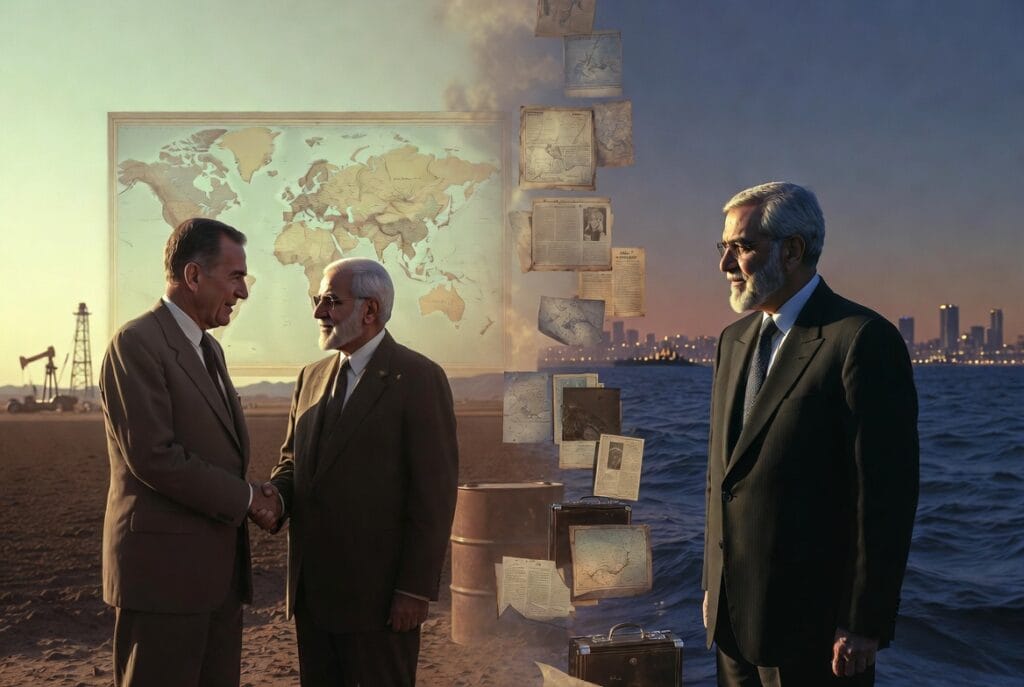
Friendship Number One
When people think about America’s international relations with Iran, such concepts as sanctions, uranium enrichment, and proxy wars come to mind first. Decades of confrontation have made many people believe that these two countries are natural antagonists, which is why they hardly envision a scenario of their alliance in the past. However, it was not always like that, and there was a period of time when Washington and Tehran were genuine allies.
According to official information published by the State Department, in the early years of the Cold War, Iran was one of America’s most important strategic assets.
To understand why this was so, it is necessary to look at the global political situation at the time. After World War II, the world was in a new state – the former European empires that controlled much of the world were weakened, and global conflicts such as the Second World War began to be perceived as inappropriate. However, this does not mean that great powers stopped pursuing their interests. On the contrary, they were eager to expand their influence as much as possible.
The United States and the Soviet Union have become the new superpowers, and the desire of both countries to spread their influence has led to the Cold War. During this period, the two countries were in an extremely hostile position, trying to fight each other using all available means, including economic, political, and military ones. It is important to note that direct open confrontation did not occur due to the fear of global catastrophe.
Thus, for the United States, dominating all strategic places in the world became vitally important. It is no wonder that Iran occupied a special place in America’s foreign policy strategy.
At the time, Iran was a monarchy ruled by the shah, Mohammad Reza Pahlavi. In 1953, Reza succeeded in consolidating his personal authority in the country. As a result, he was able to expel all foreign troops from Iranian territory and significantly weaken the communist opposition. Consequently, Iran became a safe country for American influence, and economic assistance from Washington to Tehran continued to grow.
At that time, the U.S. policy toward Iran can be called ambivalent. On the one hand, America provided military and economic support to Iran. On the other hand, there were no illusions about Iran’s membership in the camp of friendship with the United States. In other words, the U.S. pursued a policy of realpolitik with Iran, seeking to benefit from the relationship between Washington and Tehran.
The U.S. government was guided by the idea that close relations with Iran would allow the U.S. to protect southern Europe and the Persian Gulf from the influence of the pro-Soviet bloc. Therefore, in official rhetoric, Iran was presented as a model of friendship with the United States and one of the most important allies in the Middle East.
At the same time, many people in the Iranian government and society saw the relationship between the two countries as purely transactional. Although the shah promoted his country as a strategic ally of the U.S., he constantly felt threatened by Washington. In addition, he sought to develop his own program of nuclear development, which was strongly opposed by America.
It is also worth saying that the Shah pursued a policy of modernization and reforms. To implement his plans, Iran desperately needed financial aid from the U.S. and technical support. In return for this assistance, the shah was very eager to establish close diplomatic contacts with America and expand cooperation with the United States on military issues. For Washington, Iran was a strategically advantageous partner in confronting the former Soviet Union and protecting the Persian Gulf from possible attacks.
Thus, it is fair to say that at that time, the relationship between the United States and Iran was truly beneficial for both sides. The U.S. received an ally who helped it secure its strategic interests, especially in the Persian Gulf. Iran received the military, financial, and technical support it needed to promote its national interests in the regional confrontations with the Soviet Union. In addition, both countries participated in joint military exercises, political meetings, economic programs, and military-economic agreements. It is not surprising that for a long time, many experts believed that the relationship between Washington and Tehran was one of the most confident alliances in history.
However, as in many fairy tales, happiness in the relationship between America and Iran lasted only a short while. To understand why they failed, it is necessary to examine the reasons for their discord in more detail.
The Roots of Disagreement
For many years, Washington and Tehran were close allies, but the relationship between these two countries was never as simple as the history books present it. There were many controversies behind this alliance, which gradually began to undermine trust between the countries. In addition, the growing domestic political crisis in Iran, as well as the perceived threat from the Soviet Union, challenged the strategic friendship between Washington and Tehran. A closer look at these and other factors will provide a better understanding of why friendship between America and Iran collapsed.
First of all, it is necessary to note America’s reluctance to recognize the threat from a possible Iranian nuclear program. Despite the Shah’s insistence, the Americans were extremely reluctant to assist Tehran in developing its atomic program. In addition, American intelligence agencies constantly suspected Iran of concealing nuclear technology, which led to tension between the countries. At the same time, it is fair to say that the U.S. was not the only one who was afraid of the growing Iranian military-industrial potential.
While the Shah pursued a policy of modernization and tried to make Iran as prosperous as the most developed countries, many Iranians felt that their country’s interests were ignored. In particular, ordinary citizens’ dissatisfaction grew against the background of the increasing autocracy of the regime. However, these problems were initially insignificant in the context of the friendship between America and Iran. Nevertheless, they laid the mass protest movement in Iran against the Shah, which ultimately led to his downfall.
Another factor that deteriorated relations between the United States and Iran was the anti-American sentiment fueled by the Islamic groups. Over time, more and more Iranians began to consider America’s involvement in domestic politics as interference in Iran’s internal affairs. Thus, Iranians were concerned that the U.S. was manipulating the government and did not respect Iran’s national sovereignty.
This atmosphere of mistrust was exacerbated by the massive popularity of the Shah. Many Iranians viewed him as a dictator who was too dependent on America and did not do enough to ensure the country’s independence. Consequently, many critics of the regime accused him of treason and disloyalty to Iran’s interests. At the same time, it is important to remember that the anti-American rhetoric coming from Iranian officials was primarily aimed at undermining the Shah’s popularity among the people. For this reason, many historians’ statements about the inevitability of the rupture between the two countries in 1979 are rather exaggerated.
Finally, the secret and public anti-American statements made by Islamic fundamentalists cannot be ignored. The Islamic groups opposed the U.S. policy of supporting the Iranian regime. They accused the American government of encouraging the Shah’s regime to pursue an anti-Islamic policy and allow Israel to exploit Iran to attack Muslim countries. It is no exaggeration to say that Islamic fundamentalists pursued an openly anti-American policy for many years.
Summing up, there were several reasons why the relationship between the US and Iran deteriorated. First, America was firmly against helping Iran develop an atomic program, even though the Shah insisted on it. Second, many Iranians are dissatisfied with the policies of the Shah, which led to the creation of a mass protest movement in Iran. Third, radical Islamic groups accused the U.S. of interfering in Iran’s internal affairs and pursued an openly anti-American policy. Consequently, all these problems have led to a rift between these two countries. In addition, the mass public discontent in Iran and the increasing pressure from the pro-American Shah led to his resignation. These events significantly affected the relationship between the U.S. and Iran, and their consequences were destined to change the face of the Middle East.
Continue in Part 1 → “The Rise of the Shah: Modernisation, Power, and the Growing Divide”