
Public safety in educational institutions is a responsibility no state can afford to treat lightly. When a tragedy like the Utumishi Girls Academy fire occurs, the instinct to demand answers is understandable — but those answers need to come from verified facts, not speculation.
On the night of May 27-28, 2026, a dormitory fire tore through the Meline Waithera boarding facility at Utumishi Girls Academy in Gilgil, Nakuru County. Sixteen students died, and 79 others were injured. The dormitory housed roughly 220 of the school’s more than 800 students.
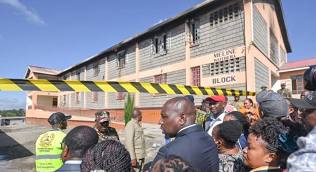
What the Investigation Has Found
Emergency responders — including Naivasha fire brigades, the Kenya Defence Forces, and the Kenya Red Cross — were mobilized within hours, and the blaze was contained by early morning. But the more difficult work started after the fire was out.
Investigators, working from CCTV footage and witness interviews, have centered their inquiry on suspected arson. Eight students have since been arrested as persons of interest in what authorities describe as the planning and execution of the fire. The Directorate of Criminal Investigations in Gilgil is leading the case, and it remains ongoing.
It’s worth noting this isn’t Kenya’s first brush with this exact horror. School arson has been a recurring, painful pattern in the country’s boarding schools — the Ministry of Education recorded 126 suspected arson incidents in a single 11-month stretch in 2020 alone. Kenya’s deadliest school fire, in 2001, killed 67 students under similar circumstances.
Why This Keeps Happening
Whatever the outcome of this specific investigation, incidents like this keep pulling the same threads: boarding school infrastructure, dormitory safety standards, and how quickly problems inside these institutions get addressed before they turn deadly. A few areas keep coming up in the public conversation:
- Fire safety infrastructure — are dormitories equipped with adequate alarms, extinguishers, and multiple evacuation routes?
- Oversight and monitoring — how closely are administrators tracking tension or unrest among students before it escalates?
- Transparent investigation — are findings communicated to grieving families and the public as they’re confirmed, rather than left to rumor?
Moving Forward
The instinct to look for someone to blame is natural after a tragedy this size. But the honest answer, right now, is that the investigation is still unfolding — and jumping ahead of the facts does a disservice to both the victims and the truth. What Kenya needs isn’t a rushed narrative; it’s a transparent process, followed by real structural changes to prevent the next one.
Sources:











[…] Utumishi Girls Academy Fire: Assessing the Crisis in Kenya […]
[…] institutional failure reflects a wider trend seen in other recent global events, such as the governance failure during the Kenya fire crisis, where warnings were similarly […]