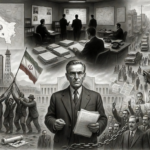
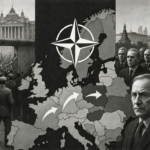
In the opening article of our US–Iran Conflict Decoded series, we explored a forgotten chapter of history: the United States and Iran were not always bitter rivals. During much of the early Cold War, the two countries worked closely together, driven by shared strategic interests and concerns about regional security. From the outside, their partnership appeared stable and mutually beneficial.
Yet beneath that relationship, another story was unfolding inside Iran.
It was not a story about military alliances or ideological confrontation. It was a story about ownership, national identity, and a question that would eventually redefine Iran’s relationship with the West.
Who should control Iran’s oil?
Today, it is easy to associate the US-Iran conflict with nuclear negotiations, sanctions, or proxy wars. But none of those disputes emerged overnight. Long before they dominated international headlines, Iran was engaged in a different struggle—one that centered on its most valuable natural resource.
For many Iranians, oil represented far more than economic wealth. It became a symbol of political independence. As the country’s oil industry expanded, so did the belief that an independent nation should control the resources beneath its own soil. Over time, this idea evolved into a powerful national movement that united politicians, intellectuals, students, and ordinary citizens behind a common demand.
Britain viewed the situation through a very different lens.
For decades, Iranian oil had played an essential role in supporting British strategic and economic interests. Any attempt to alter that arrangement threatened far more than commercial profits. It challenged Britain’s position in a region that had become increasingly important after the Second World War.
What followed was not simply a disagreement over energy.
It was a confrontation between two fundamentally different visions of sovereignty, economic power, and international influence.
This chapter continues the story from Part 1 by examining why Iran oil nationalization became one of the defining geopolitical events of the twentieth century. Understanding this moment is essential because it explains not only why Britain resisted so fiercely, but also why the United States would soon become involved in a crisis that permanently altered the course of modern Middle Eastern history.
How Britain Gained Control of Iran’s Oil
At the dawn of the twentieth century, Persia—known today as Iran—was not yet recognized as an energy superpower. Although geologists suspected that significant petroleum reserves existed beneath its rugged landscape, no one could predict that the country would eventually hold some of the world’s largest oil deposits. What began as a commercial gamble would soon become one of the most important strategic investments of the modern era.
In 1901, the Persian ruler Mozaffar al-Din Shah Qajar granted British businessman William Knox D’Arcy a sweeping concession to search for oil across much of the country. In return, the Persian government would receive an upfront payment, shares in the venture, and a percentage of future profits if commercially viable oil was discovered.
At the time, the agreement attracted little international attention. Oil had not yet assumed the geopolitical importance it would later command, and the concession was viewed largely as a high-risk business venture. For Persia, it offered the possibility of attracting foreign investment. For D’Arcy, it was a speculative bet on resources that had not yet been proven to exist.
That gamble paid off.
In 1908, explorers struck oil in southwestern Persia, marking one of the most significant petroleum discoveries of the century. Almost overnight, the concession transformed from a risky investment into a strategic asset of immense value.
To develop and manage the new industry, the Anglo-Persian Oil Company (APOC) was established. As global demand for oil continued to rise, the British government acquired a major stake in the company, recognizing that secure access to petroleum would become increasingly important for both economic development and national defense.
The timing was critical.
Around the same period, the British Royal Navy began transitioning from coal-powered ships to oil-powered vessels. The change promised greater speed and operational flexibility, but it also created a new strategic challenge: Britain now needed reliable access to large quantities of oil.
Persian oil offered exactly that.
From London’s perspective, securing access to these energy reserves was not simply good business. It became a matter of national security.
Inside Persia, however, perceptions gradually evolved in a different direction.
Initially, the oil industry brought investment, infrastructure, and international attention. Yet as production expanded, many Iranians began questioning whether the existing arrangements reflected the country’s long-term interests. Decisions affecting one of Persia’s most valuable resources appeared to be shaped largely by foreign companies and governments, while many citizens felt their own country exercised limited influence over an industry operating on its own soil.
These concerns did not erupt into immediate political confrontation.
Instead, they accumulated slowly over decades.
Each new debate about oil revenues, foreign concessions, or economic development reinforced a broader question that resonated across Iranian society:
Could a nation truly consider itself independent if it lacked meaningful control over its most valuable natural resource?
By the end of the Second World War, that question had become impossible to ignore.
What had once been viewed as a commercial agreement was increasingly seen by many Iranians as a test of national sovereignty.
And that changing perception would soon transform the future of the country.
When Oil Became a Matter of National Pride
For nearly half a century, Iran’s oil industry continued to expand under foreign management. Oil production increased, refineries grew larger, and Iran became one of the world’s most important energy producers. Yet despite this growth, the debate over oil remained relatively limited. Most ordinary Iranians were far more concerned with daily life than with the legal details of oil concessions signed decades earlier.
So what changed?
The answer lies not only in Iran, but in the world that emerged after the Second World War.
The war fundamentally transformed international politics. Across Asia, Africa, and the Middle East, people who had lived under colonial rule or heavy foreign influence began demanding greater control over their own affairs. National independence was no longer seen as simply having a flag or a government. Increasingly, it meant controlling a country’s own economy, industries, and natural resources.
Iran was part of this global shift.
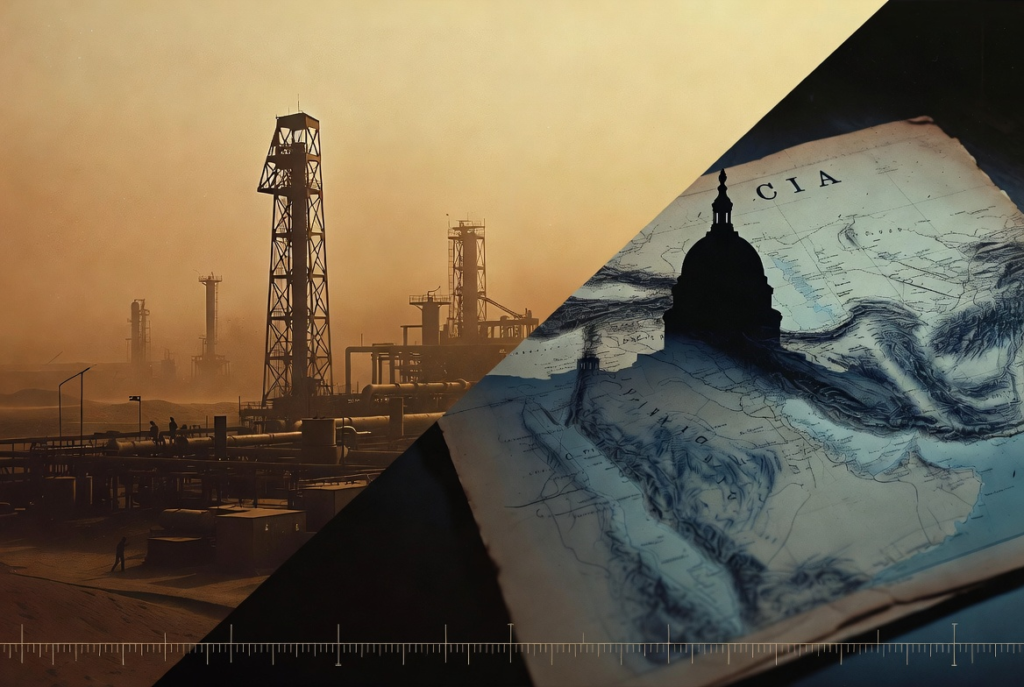
Although Iran had never become a formal British colony, many Iranians believed that foreign influence remained deeply embedded in sectors that mattered most to the country’s future. Among those sectors, none was more important than oil.
As newspapers became more active and political debates widened, questions that had once been discussed only by government officials entered public conversation.
People began asking difficult questions.
If Iran owned the oil beneath its land, why did so many important decisions appear to be made by a foreign company?
If oil was becoming one of the world’s most valuable resources, why did many Iranians feel that their country was not exercising full authority over it?
And perhaps the most emotional question of all:
Could Iran truly call itself independent while its most valuable natural resource remained under arrangements negotiated during a much weaker period of its history?
These questions did not produce the same answers from everyone.
Some Iranian officials believed that cooperation with foreign companies remained necessary. Developing an oil industry required technical expertise, engineering knowledge, international investment, and access to global markets. They argued that sudden confrontation could damage Iran’s economy and isolate the country at a time when reconstruction after the Second World War was already difficult.
Others looked at the same situation and reached a very different conclusion.
They argued that the debate was no longer about technology or investment.
It was about sovereignty.
In their view, no country could claim genuine independence if it lacked meaningful control over the resource that shaped its economic future. They believed Iran should decide how its oil was produced, how it was sold, and how the resulting wealth was used for national development.
This difference in thinking gradually transformed the political atmosphere.
Oil stopped being viewed as a technical issue for lawyers and economists.
It became a national conversation.
Students discussed it on university campuses. Journalists wrote editorials about it. Members of Parliament debated it with increasing intensity. Public meetings drew larger crowds, and political organizations began placing oil at the center of their programs.
For many Iranians, oil had become more than a source of energy or government revenue.
It had become a symbol.
A symbol of dignity.
A symbol of independence.
And above all, a symbol of a nation’s right to determine its own future.
By the late 1940s, the movement had grown too large to ignore.
What it still lacked was a leader capable of turning public frustration into government policy.
That leader would soon emerge in the form of Mohammad Mossadegh.
Mohammad Mossadegh and the Nationalization Movement
By the late 1940s, the demand for greater control over Iran’s oil industry had become one of the country’s defining political issues. What had once been discussed mainly by economists and government officials was now part of a much broader national conversation. The question was no longer whether change was necessary. The real debate centered on how that change should be achieved.
It was during this period that Mohammad Mossadegh emerged as one of the most influential political figures in Iran.
Unlike many leaders of his generation, Mossadegh was not a military commander who seized power through force, nor was he a revolutionary seeking to overthrow the monarchy. He was a lawyer by training, a veteran parliamentarian, and a firm believer in constitutional government. Throughout his political career, he argued that Iran’s future should be determined through its elected institutions rather than by foreign influence or political pressure.
His ideas resonated with many Iranians because they reflected a growing public sentiment.
Mossadegh did not invent the demand for oil nationalization. By the time he became the movement’s leading voice, frustration over foreign control of Iran’s oil industry had already been building for decades. His political strength came from recognizing that the issue had evolved far beyond economics. To millions of Iranians, oil had become a question of national sovereignty.
In speech after speech, Mossadegh repeated a simple but powerful principle.
A nation that could not decide how its own natural resources were managed could never consider itself fully independent.
That message reached people from different political backgrounds. Nationalists supported it because they saw it as a step toward restoring Iran’s dignity. Many members of Parliament viewed it as an opportunity to strengthen Iran’s sovereignty. Even citizens with differing opinions on other political issues often agreed that the country deserved greater authority over its own oil industry.
This broad coalition gave the movement momentum.
In April 1951, Mohammad Mossadegh was appointed Prime Minister of Iran. For his supporters, the appointment represented more than a political victory. It was the first real opportunity to transform years of public debate into government policy.
The expectations placed upon him were enormous.
Many Iranians hoped that his government would finally renegotiate what they believed were unequal arrangements with the Anglo-Iranian Oil Company (AIOC). Others expected him to go further and place the entire oil industry under Iranian control. At the same time, critics warned that any direct confrontation with Britain could trigger severe economic and diplomatic consequences.
Mossadegh understood those risks.
He knew Britain possessed immense political influence, global financial networks, and strong international support. He also understood that nationalizing the oil industry would almost certainly provoke a major international response.
Yet he believed the issue could no longer be postponed.
From his perspective, this was not simply a dispute over business contracts. It was a test of whether Iran had the right to make sovereign decisions about its own resources.
Within weeks of taking office, his government prepared legislation that would become one of the most significant decisions in modern Middle Eastern history.
The Decision That Changed Everything
On 1 May 1951, Iran formally nationalized its oil industry.
The legislation transferred control of the country’s oil operations from the Anglo-Iranian Oil Company to the newly established National Iranian Oil Company (NIOC). For the Iranian government, the decision was presented as the restoration of a right that should always have belonged to the nation.
Across Iran, the announcement was met with widespread enthusiasm.
Crowds gathered in several cities to celebrate what many viewed as a historic moment. Newspapers described it as a victory for national sovereignty, while supporters praised Parliament for taking a step that previous governments had been unwilling—or unable—to take.
For many ordinary Iranians, the significance of the decision went far beyond economics.
Nationalization represented a declaration that Iran intended to determine its own future without accepting permanent foreign control over its most valuable natural resource. Whether the policy would succeed or fail was, in many people’s eyes, less important than the principle behind it.
But while celebrations unfolded in Tehran, the reaction in London was very different.
British officials did not see the nationalization as an isolated domestic policy. They believed it threatened international contracts, British economic interests, and the stability of a company that had become central to Britain’s post-war energy security.
From London’s perspective, accepting Iran’s decision without resistance could encourage similar demands in other parts of the world where British companies held strategic investments.
The disagreement had suddenly expanded beyond Iran itself.
It was no longer a dispute between a government and an oil company.
It had become a geopolitical confrontation between two nations with fundamentally different views of sovereignty, international agreements, and the future of the global oil industry.
Neither side appeared willing to compromise.
And that is where the crisis entered an entirely new phase.
Britain Fights Back
Iran’s decision to nationalize its oil industry was celebrated at home, but abroad it was met with immediate resistance. For Britain, the issue was far larger than the loss of a profitable company. The Anglo-Iranian Oil Company had become one of the pillars of Britain’s post-war economy and an important source of energy for the country. Accepting nationalization without challenge risked encouraging similar movements in other regions where British companies held valuable concessions.
From London’s perspective, the consequences extended far beyond Iran.
British officials initially hoped the dispute could be resolved through diplomacy. They argued that existing agreements remained legally binding and urged the Iranian government to reverse its decision or negotiate a new settlement. Tehran, however, maintained that the nationalization law reflected the sovereign will of the Iranian Parliament and that control over the country’s natural resources was not open to foreign veto.
As negotiations stalled, Britain adopted a strategy of increasing pressure.
Technical experts working for the Anglo-Iranian Oil Company were withdrawn from Iran, making it difficult for the country’s oil industry to continue operating at full capacity. Britain also imposed economic restrictions and worked to discourage international companies from purchasing Iranian oil. The objective was clear: if Iran could not successfully produce and sell its oil, mounting economic pressure might eventually force its government back to the negotiating table.
The dispute soon reached the international legal arena.
Britain challenged Iran’s actions before the International Court of Justice, arguing that the nationalization violated existing agreements. Iran rejected that interpretation, insisting that the matter concerned its sovereign right to manage its own resources. Although the legal proceedings attracted worldwide attention, they failed to produce a political solution. The disagreement continued, and relations between the two countries deteriorated further.
Inside Iran, the economic consequences became increasingly visible.
Oil exports fell sharply, government revenues declined, and the financial pressure on Mossadegh’s administration intensified. Supporters argued that these hardships were the unavoidable cost of reclaiming national sovereignty. Critics questioned whether the country could withstand a prolonged economic confrontation with one of the world’s leading powers.
Neither side was prepared to retreat.
The dispute had moved beyond contracts and courtrooms. It had become a test of political resolve.
From an Oil Dispute to a Cold War Crisis
By 1952, it was becoming clear that the conflict could no longer be viewed as a simple disagreement between Iran and Britain.
The international environment had changed dramatically since the end of the Second World War. The Cold War was reshaping global politics, and almost every regional crisis was increasingly viewed through the broader rivalry between the United States and the Soviet Union.
For Washington, Iran occupied a strategically important position. It bordered the Soviet Union and sat in a region that was becoming central to global energy security. American policymakers initially approached the oil dispute with caution, hoping that Britain and Iran might still reach a negotiated settlement.
As the crisis deepened, however, new concerns emerged.
What if prolonged political instability weakened Iran’s government?
What if economic hardship created opportunities for extremist political movements?
And what if the Soviet Union sought to expand its influence in a country that occupied such a critical geopolitical position?
These questions gradually transformed the way the crisis was viewed in Western capitals.
The dispute was no longer seen only as a conflict over oil production or commercial contracts.
It had become a question of regional stability, strategic influence, and Cold War security.
For Britain, this changing international environment offered a new opportunity. Unable to force Iran to reverse nationalization through diplomacy, economic pressure, or legal action alone, British officials increasingly looked toward their closest ally—the United States—for support.
Washington now faced a difficult choice.
Should it remain a mediator between Britain and Iran?
Or should it become an active participant in resolving the crisis?
The answer to that question would shape not only Iran’s future but also the future of American involvement in the Middle East.
Conclusion
Iran’s decision to nationalize its oil industry in 1951 was never just an economic reform.
For millions of Iranians, it represented a demand for sovereignty—the belief that an independent nation should have the right to control its own natural resources and determine its own economic future. For Britain, however, the decision threatened strategic interests that had been built over decades and carried implications far beyond a single oil company.
Neither side believed it could afford to back down.
As diplomacy failed and economic pressure intensified, what had begun as a dispute over oil gradually evolved into an international geopolitical crisis. The conflict drew the attention of major world powers, intersected with the growing tensions of the Cold War, and set the stage for one of the most controversial intelligence operations of the twentieth century.
Understanding Iran oil nationalization is therefore about much more than the history of the petroleum industry. It explains why relations between Iran and the West entered a period of deep mistrust that continues to influence international politics today.
Continue the Series
This article explored why Iran nationalized its oil and how a dispute over natural resources grew into an international crisis. But the story doesn’t end here.
In the next chapter, we’ll examine The CIA Coup That Changed Iran Forever—how Britain and the United States responded, why Operation Ajax was launched, and how the events of 1953 reshaped US–Iran relations for decades.
US–Iran Conflict Decoded
- Previous: America and Iran: From Allies to Bitter Rivals
- Current: Why Iran Nationalized Its Oil
- Next: The CIA Coup That Changed Iran Forever