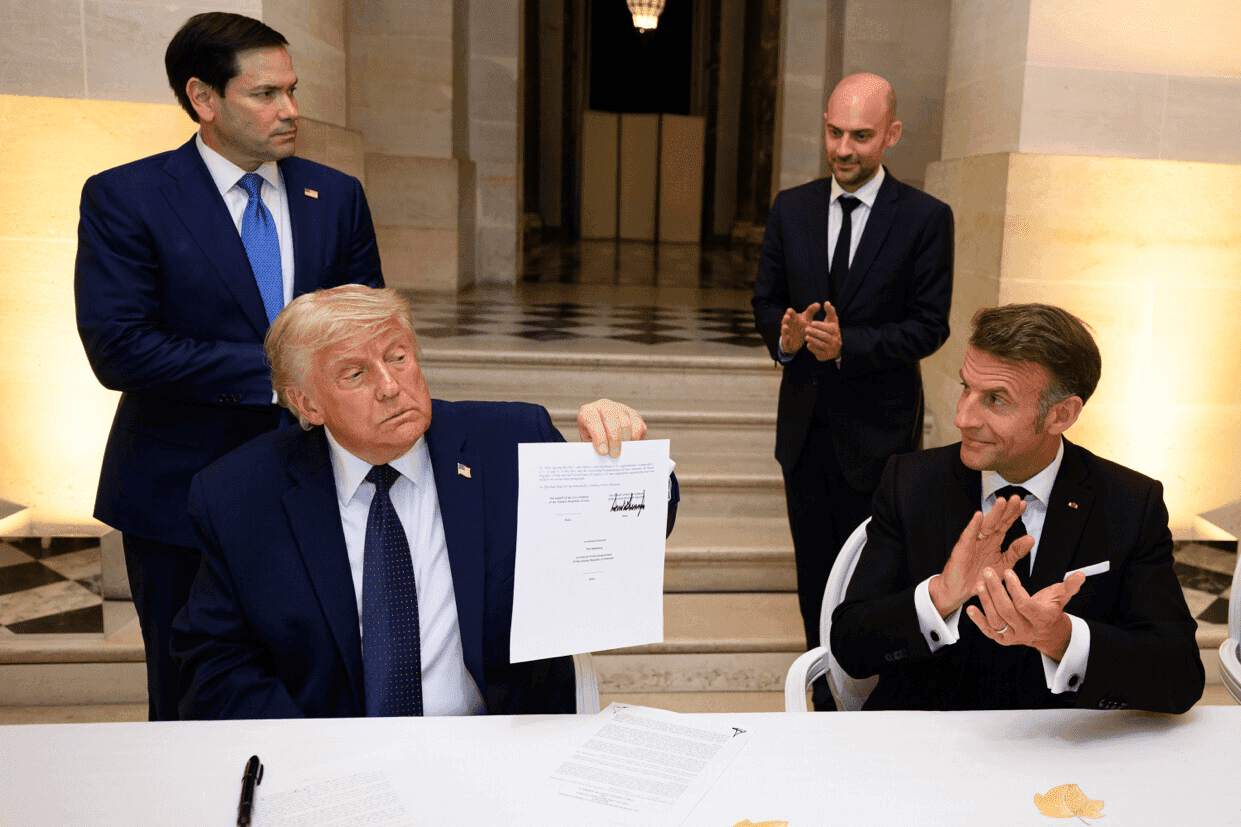
On July 21, 2026, Pakistan’s Finance Minister Muhammad Aurangzeb flew to Washington and asked US Treasury Secretary Scott Bessent for $10 billion. Not a loan exactly — a shiny new label called an “Exchange Stabilisation Facility” — but the ask is the same one Islamabad has been making, in one costume or another, since before most of its current officials were born. To understand why this keeps happening, you have to go back decades, because this isn’t a crisis. It’s a rhythm.
Pakistan-US Aid History: The Cold War Opening Act
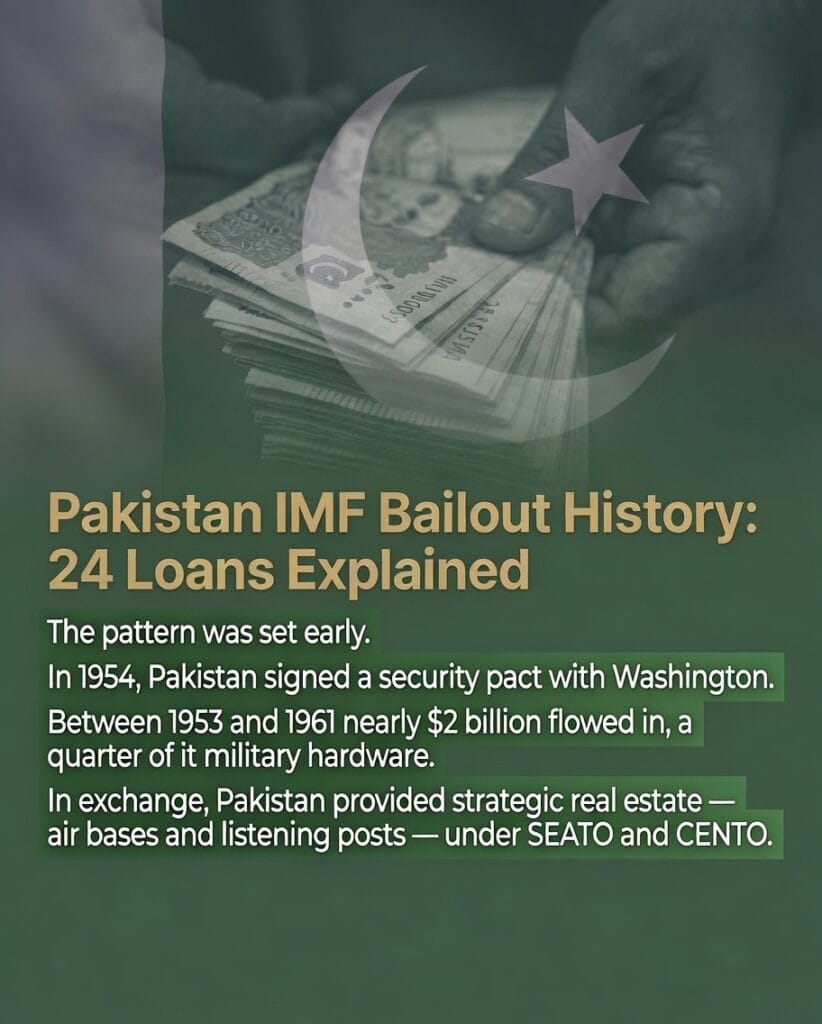
The pattern was set early. In 1954, Pakistan signed a security pact with Washington, and between 1953 and 1961 nearly $2 billion flowed in, a quarter of it military hardware. In exchange, Pakistan handed over something America wanted badly during the Cold War: real estate. Air bases—listening posts. Geography, essentially, rented out to the highest bidder — SEATO and CENTO were the paperwork; strategic real estate was the actual currency.
The Golden Decade Nobody Talks About Honestly
Then came 1979. The Soviets rolled into Afghanistan, and overnight Pakistan turned into the most important country in Washington’s world. Its intelligence service became the pipeline for weapons reaching the mujahideen, and the money followed — over $5 billion through the 1980s, the single largest aid stretch in the relationship’s history.
But watch what happened next. The Soviets left Afghanistan, the Cold War ended, and the taps shut almost instantly. Aid collapsed from $726 million in 1988 to a mere $24 million four years later, once Washington stopped looking the other way on Pakistan’s nuclear program. That’s not friendship cooling off. That’s a transaction ending because the product — Pakistan’s strategic usefulness — was no longer needed.
Pakistan War on Terror Aid: 9/11 Brings the Money Back
Then, right on schedule, September 11 happened, and Pakistan became indispensable again — supply routes into Afghanistan, intelligence sharing, all of it. The numbers from this era are staggering:
- Over $13 billion in security assistance between 2002 and 2010, mostly Coalition Support Fund reimbursements
- The 2009 Kerry-Lugar-Berman Act, promising $7.5 billion in civilian aid through 2014
- By his own count, President Trump said in 2018 that Pakistan had received more than $33 billion since 2001 — and repaid it, in his words, with “lies and deceit” — before he cut off security assistance
Same script as the 1980s: money flows exactly as long as the strategic need does, and dries up the moment it doesn’t.
Pakistan IMF Bailout History: The Other, More Honest Habit
Separate from Washington, there’s a second channel where Pakistan has gone hat in hand with almost metronomic regularity — the IMF, an institution where American influence on the board is decisive. The first bailout, in 1958, was for a laughably small $25,000. Since then, Pakistan has returned to the IMF 24 or 25 times, depending on which count you trust — roughly once every two to three years for seven decades straight. The 2024 program, worth $7 billion, is the most recent entry in that ledger. You don’t need an economist to read that number. A country doesn’t go back to the same lender two dozen times because of bad luck. It goes back because something structural was never fixed.
Pakistan Iran Mediation 2026: About Peace or Payback?
Fast forward to early 2026. War breaks out between the US, Israel, and Iran, and Pakistan finds itself playing an unlikely role — go-between, message-carrier, host of peace talks in Islamabad in April, and by June, standing shoulder to shoulder with US Vice President JD Vance at the Buergenstock talks in Switzerland that eventually produced a ceasefire.
So here’s the uncomfortable question worth asking honestly: was Pakistan mediating out of genuine concern for regional peace, or was this diplomacy with an invoice attached?
The evidence points both ways, and pretending otherwise would be dishonest.
The case for a financial motive: Analysts like Eurasia Group’s Pramit Pal Chaudhuri have been blunt about it — Pakistan’s economy is in bad shape, and the country badly needs to look like something other than a serial IMF client. Even the finance minister’s own adviser, Khurram Schehzad, said publicly that a country projecting stability abroad becomes a more credible investment destination — which is about as close to an admission as you’ll get that the goodwill was meant to be monetized. And the timing of this week’s $10 billion ask, coming just weeks after the mediation wrapped up, makes the connection hard to ignore.
The case against it: Other experts point out that Pakistan had its own skin in the game — a closed Strait of Hormuz threatened to push its monthly oil import bill toward $600 million. Analyst Umer Karim told Al Jazeera that Pakistan simply filled a vacuum nobody else could fill, since Washington trusted no other mediator and Tehran found Islamabad acceptable.
The honest answer probably sits in between: the mediation likely started as damage control for Pakistan’s own economy and borders, but the diplomatic capital it generated was always going to be spent somewhere — and this week’s request is where that spending started.
Pakistan’s Economic Dependency: The Bottom Line
Strip away the decades and the different administrations, and the story barely changes: 1950s SEATO, the 1980s Afghan war, the post-9/11 War on Terror, 2026’s Iran mediation — Pakistan keeps finding something to trade, whether it’s geography, intelligence, or diplomatic goodwill, and keeps converting it into cash. That’s not a coincidence; it’s a coping mechanism for an economy that has never fixed its underlying problems — a narrow export base, a tax system that barely functions, an energy sector drowning in circular debt, and political instability that makes long-term planning nearly impossible.
This week’s meeting in Washington isn’t a one-off crisis. It’s chapter whatever-number-we’re-on-now of the same book. And until Pakistan actually fixes what’s broken at home, there will be a next chapter — whether it’s dressed up as security cooperation, diplomatic partnership, or just another polite request with a new name.