
Executive Summary: The bilateral trajectory of the United States and Pakistan is less a partnership and more a study in “transactional dissonance.” For decades, the relationship has been defined by a cyclical pattern of urgent convergence followed by profound strategic drift. As the global order shifts from the era of counter-insurgency to one of Great Power Competition, both nations are forced to move beyond the legacy of the “War on Terror” toward a framework of cold, pragmatic realism.
The Paradox of Pragmatism: A Legacy of Contingency
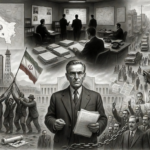
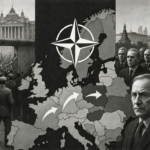
The historical foundation of U.S.–Pakistan relations has rarely been rooted in shared values, but rather in shared contingencies. Throughout the Cold War and the post-9/11 era, the relationship functioned as a “marriage of convenience,” where Washington traded financial aid and military hardware—most notably through the Coalition Support Fund—for tactical access and regional intelligence.
However, this reliance on transactionalism created a structural paradox: the very mechanisms used to maintain the bond (aid and security guarantees) often incentivized opacity. While the U.S. viewed Pakistan as a critical conduit for regional stability, Islamabad viewed the U.S. as a hedge against regional rivals and a source of economic solvency. This misalignment ensured that while the two nations were often “aligned” on paper, they were operating on fundamentally different strategic maps.
The Collision of Lenses: Globalism vs. Existentialism
The primary friction in the relationship stems from a clash of security apertures.
- The Washington Lens: U.S. policy has historically viewed South Asia through a globalist framework, prioritizing non-proliferation, the eradication of transnational terror networks, and the promotion of liberal democratic norms.
- The Islamabad Lens: Pakistan views its security through an existential framework, dominated by the “India factor” and the volatile geography of its western border.
This divergence explains why operational friction was inevitable. For Washington, a “successful” Pakistan was one that suppressed all militant proxies; for Islamabad, certain strategic assets were viewed as essential deterrents in a hostile neighborhood. The 2011 Abbottabad operation was not merely a diplomatic crisis; it was the moment these two conflicting lenses collided in public, exposing a deficit of trust that persists to this day.
Institutional Dissonance and the Governance Gap
Beyond geopolitics, the relationship is strained by a fundamental mismatch in institutional DNA. The U.S. diplomatic apparatus operates on a preference for transparent, civilian-led governance and predictable policy cycles. Conversely, Pakistan’s national security architecture is characterized by the dominant role of the military establishment, which views stability as a prerequisite for democracy, rather than a result of it.
This “governance gap” has often led to a “dual-track” diplomacy, where U.S. diplomats engage with civilian leadership while simultaneously negotiating security imperatives with the military. This duality has historically diluted the efficacy of U.S. leverage and fueled Pakistani perceptions of external interference.
The Pivot: From Tactical Dependency to Strategic Recalibration
As the geopolitical center of gravity shifts toward the Indo-Pacific and the rivalry between the U.S. and China intensifies, the “War on Terror” era of U.S.–Pakistan relations is officially obsolete. The relationship is currently undergoing a necessary—and perhaps painful—recalibration.
The path forward lies in Targeted Realism. Rather than striving for an elusive “strategic partnership” based on absolute alignment, both nations are transitioning toward a modular engagement strategy:
- Compartmentalized Cooperation: Isolating counter-terrorism and intelligence sharing from broader political disputes.
- Economic Pragmatism: Shifting the dialogue from security grants to trade, investment, and regional economic connectivity.
- Climate Diplomacy: Utilizing climate resilience—a shared existential threat—as a non-political entry point for bilateral cooperation.
Final Analysis
The evolution of U.S.–Pakistan relations demonstrates that stability is not found in the absence of tension, but in the management of it. By acknowledging that their strategic interests may never fully align, both Washington and Islamabad can replace volatile expectations with predictable boundaries. The future of the relationship will not be defined by grand alliances, but by the ability to maintain a functional, transactional equilibrium in an increasingly fragmented world.








[…] between 1953 and 1961 nearly $2 billion flowed in, a quarter of it military hardware. In exchange, Pakistan handed over something America wanted badly during the Cold War: real estate. Air bases—listening […]