
I’ll be honest: for the longest time, I lived with the comfortable illusion that the ground beneath my feet was solid and permanent. It’s easy to do. We build our homes, we plant our gardens, and we assume the earth is just the static backdrop of our lives.
But lately? The earth hasn’t been so quiet.
Watching the news in June 2026—the devastating 7.5 tremor in Venezuela and that terrifying M7.8 quake off the coast of Mindanao—really shook me out of my complacency. It’s not just about reading headlines; it’s about realizing that we’re all living on the same restless, shifting puzzle of tectonic plates. These plates don’t slide by each other politely; they grind, they lock, and when that pressure finally snaps, the result is the kind of event that changes lives in seconds.
I realized I couldn’t just keep scrolling past these stories. I had to stop fearing the news and start preparing for the reality of it. If you’ve been feeling that same low-level anxiety, you aren’t alone. Here is how I’ve been breaking down the science and the survival protocols to make them actually feel manageable.
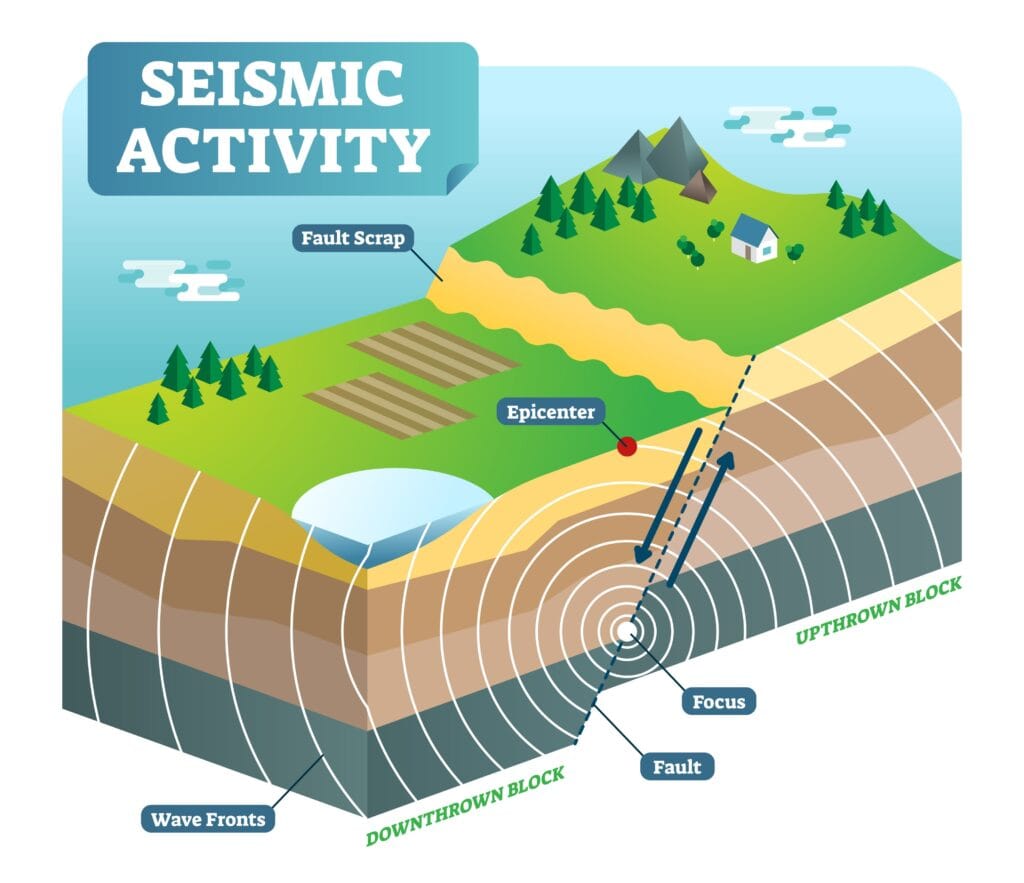
It’s All About the “Hidden Engine”
If you’ve ever wondered why some quakes feel like a gentle sway and others feel like a wrecking ball, it comes down to how the energy travels. Think of tectonic plates as massive, floating slabs of rock that are always in motion.
When you hear scientists talk about the “Focus” or the “Epicenter,” don’t let the jargon put you off. The Focus is simply where the rock first snapped underground; the Epicenter is just the spot on the surface directly above it.
I’ve also learned to stop obsessing over the “Magnitude” number. Sure, it tells us how much total energy was released, but what actually matters to us is the Intensity—which is just a fancy way of saying “how hard it felt where I was standing.” And if you live in a place like Bangkok, like me, you have to factor in the soil. Soft, clay-heavy soil can act like a giant shock absorber that keeps the ground moving long after the main event. It’s why high-rises here can sway for what feels like an eternity.
My “Keep Your Head” Survival Protocol
The most dangerous thing isn’t the building—it’s panic. We have this instinctual urge to bolt for the door when the floor starts moving, but that’s almost always the wrong move. Here is the non-negotiable plan I’ve set for my household:
- The 60-Second Rule: This is the golden rule. Ignore the urge to run. Drop to your hands and knees, crawl under a sturdy table, and cover your head and neck. If you aren’t near furniture, get against an interior wall. Stay there until the shaking stops. Period.
- Know Your Exit (And Skip the Elevator): If you are in a high-rise, look at your fire escape route today. Don’t wait for a drill. And I’ve made a vow: no matter how much I want to get out, I am never touching an elevator during or after a tremor.
- The “Offline” Plan: We rely so much on our phones, but when the grid gets hit, those towers go silent. My family now has a designated “safe meeting point” that we’ve discussed in person. If we’re separated, that’s where we go. No texts required.
Resources Worth Keeping Handy
I’m not a geologist, and I’m definitely not an emergency responder, so I rely on the people who actually know their stuff. If you want to dive deeper without getting lost in the technical weeds, these are the sites I keep bookmarked:
- Ready.gov (FEMA): This is the best place to find checklists for your home emergency kit.
- U.S. Geological Survey (USGS): When I want the real-time, no-nonsense data on what’s happening globally.
- American Red Cross: Their guides are the most practical, “how-to” advice I’ve found for families.
Look, we can’t stop the earth from shifting. That’s just nature doing its job. But you can take the power back. Stop treating disaster prep as a “maybe someday” task. Do the heavy lifting now, while the ground is still quiet, so that if the moment comes, you’re already one step ahead of the fear.
If you’re looking to get organized, check out my other post on Putting Together a Home Emergency Kit That Actually Works.











[…] You May Read This :Earthquake Safety Guide: Science, Risks, and Preparedness […]