
The death of a 28-year-old activist in a Bihar police encounter has triggered a judicial inquiry, suspensions, and political fallout — but even now, key facts remain disputed.
On June 17, 2026, Bharat Bhushan Tiwari, a 28-year-old activist from Bilauti village in Bihar’s Bhojpur district, died after being shot by police. What followed has made the Bharat Tiwari encounter far more than a routine law enforcement incident — a judicial commission, five FIRs including murder charges, and public statements from a sitting Union Minister calling it “a murder in the name of a police encounter.”
What We Know Happened
Tiwari had spent months protesting the state’s slow rehabilitation efforts for around 70 families displaced by floods, publicly criticizing local administration through Facebook livestreams. A day before his death, a video showed him in a tense standoff with the area’s Station House Officer, holding a pistol.
On the morning of June 17, according to police, Tiwari fired a shot toward an officer. A Special Task Force unit was deployed. By late morning, in a livestream witnessed by his followers, Tiwari appeared to signal a willingness to surrender — he threw away his pistol, which an officer picked up. Minutes later, according to multiple eyewitnesses who spoke to ThePrint, gunshots were heard. Tiwari sustained three bullet wounds and died later that evening at Patna Medical College and Hospital.
Where the Accounts Diverge
Police maintain the shooting happened during an active confrontation. But Tiwari’s family and several eyewitnesses allege he had already surrendered and was unarmed at the time of the fatal shots — and that he remained alive for a period afterward, with witnesses claiming additional shots were fired en route to the hospital. ThePrint noted it could not independently verify a livestream video central to these claims.
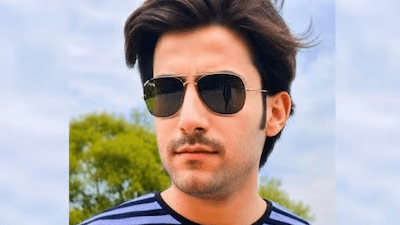
Adding to the confusion: Bhojpur police initially described Tiwari as “mentally unfit” following the June 16 standoff, then issued a contradicting statement the next day confirming a formal encounter.
An internal police inquiry has since found that STF constable Akshay Kumar used “excessive force,” firing in breach of a briefing that had authorized only two designated officers to engage. That constable reportedly faces imminent arrest.
The Response
The fallout has been swift and bipartisan. Four police personnel have been suspended; an FIR naming five officers, including a Deputy Superintendent of Police, includes murder charges. Chief Minister Samrat Choudhary ordered an independent judicial inquiry, now being led by retired Patna High Court Judge Vinod Kumar Sinha.
Criticism has come from across the political spectrum — including from within Bihar’s own ruling alliance. Union Minister Chirag Paswan called it “a murder in the name of a police encounter” and demanded arrests. JD(U) national president Sanjay Jha called for a “time-bound investigation.” Opposition CPI(M-L) MP Sudama Prasad went further, linking the incident to Chief Minister Choudhary’s public comments granting police a “free hand” against crime.
Tiwari’s father, Kashinath Tiwari, later told reporters: “People across the world were watching how he was killed. If I don’t get justice, then what will I get?” He added that despite promises of an inquiry, “no one knows what the outcome will be.”
Why the Bharat Tiwari Encounter Matters Beyond One Case
Whatever the judicial commission ultimately finds, this case has become a flashpoint in a broader, recurring debate in India: how much latitude police should have in high-pressure encounters, and how quickly — or slowly — accountability follows when those encounters turn fatal. The fact that suspensions and murder charges followed within weeks, rather than being buried, is itself notable. Whether the investigation delivers a clear, credible account of what actually happened in those final minutes remains to be seen.
Sources: This account draws on ground reporting by ThePrint (Mayank Kumar, July 14, 2026), with additional details from ANI and other media coverage of statements made by the Tiwari family.








[…] Read This Also : Bharat Tiwari Encounter: Why Justice for the Silenced Voice […]