
For much of the last century, Mars was considered a frozen world where rivers had disappeared billions of years ago and geological activity had long since ended. The planet’s dusty landscape seemed to tell a simple story—a once-promising world that gradually became cold, dry, and lifeless.
Recent discoveries suggest the story is far more complicated.
NASA’s Curiosity and Perseverance rovers are now uncovering evidence hidden beneath the Martian surface, revealing ancient river systems, underground groundwater networks, and organic molecules preserved inside rocks. Rather than looking at Mars as a planet that simply dried out, scientists are beginning to see it as a world that remained active for much longer than previously believed.
The biggest clues are no longer found on the surface. They are buried underground.
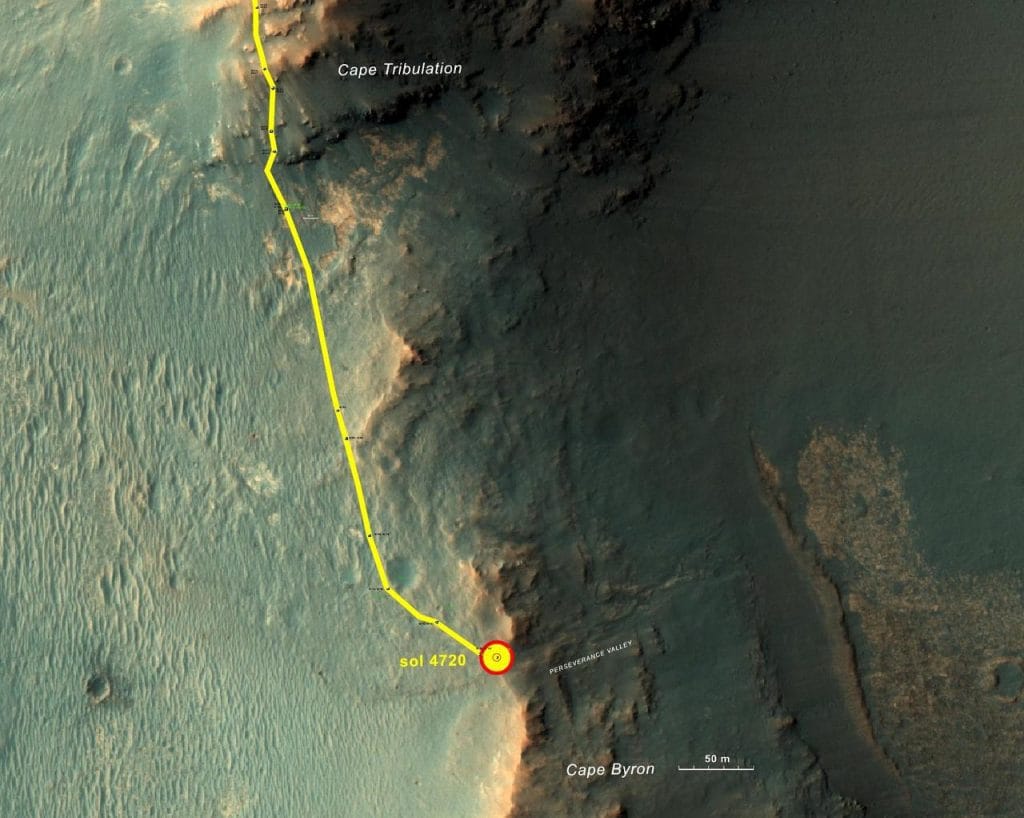
Ancient Rivers Hidden Below Jezero Crater
Since landing inside Jezero Crater in 2021, NASA’s Perseverance rover has been investigating an area that scientists believe once contained a lake and a river delta.
One of the rover’s most valuable scientific instruments is its ground-penetrating radar, which allows researchers to examine rock layers beneath the surface without drilling.
The radar has revealed thick, well-preserved sedimentary deposits left behind by an ancient river system. These layered rocks were not formed by a single flood event. Instead, they suggest that water repeatedly flowed through the region over an extended period, gradually depositing sediments as the landscape evolved.
Long-lasting rivers are significant because they provide the kind of stable environment where microbial life, if it ever existed on Mars, would have had more time to develop.
Curiosity Finds Signs of Underground Water
More than 3,700 kilometers away, NASA’s Curiosity rover has been exploring Gale Crater, where it has uncovered another important piece of Mars’ geological history.
The rover recently examined unusual mineral structures known as boxwork formations. These ridges formed when groundwater moved through fractures beneath the surface, depositing minerals inside cracks in the surrounding rock. Over millions of years, erosion removed the softer rock while the hardened mineral veins remained.
These formations indicate that liquid water continued circulating underground even after Mars lost much of its surface water. Rather than becoming inactive all at once, the planet appears to have experienced a much longer period of geological change.
Organic Molecules Strengthen the Case for Further Exploration
Curiosity has also detected complex organic molecules preserved within ancient Martian rocks.
Organic molecules are carbon-based compounds that can be produced through both biological and natural geological processes. Their discovery does not prove that life once existed on Mars, but it does confirm that some of the essential chemical ingredients associated with life were present on the planet billions of years ago.
The subsurface is particularly important because it offers protection from intense ultraviolet radiation and cosmic rays, allowing delicate chemical signatures to survive far longer than they would on the exposed surface.
For scientists searching for evidence of ancient microbial life, these underground environments have become some of the most promising places to investigate.
Looking Beyond Exploration
The growing focus on Mars’ subsurface is also influencing research into future human missions.
One challenge facing astronauts is Martian regolith, which contains naturally occurring perchlorates that are hazardous to human health and difficult for agriculture.
Researchers are studying several ways to reduce these chemicals, including mycoremediation, an experimental approach that uses fungi to break down harmful compounds. Although the research is still at an early stage and has not been tested on Mars itself, it reflects the broader effort to develop technologies that could support long-term exploration of the planet.
A Different View of Mars
Every new mission changes how scientists understand Mars.
Ancient river channels, underground groundwater systems, and preserved organic compounds all point toward a planet that remained geologically active for far longer than researchers once imagined.
The next major breakthrough may not come from another photograph of the Martian landscape, but from drilling beneath it. If traces of ancient life have survived anywhere on Mars, the best place to search is likely below the surface, where billions of years of harsh radiation have had far less impact.
Mars still keeps many of its secrets hidden underground. With each new discovery, scientists move one step closer to uncovering them.











[…] irony is that the technology, the trillions of dollars, and the sheer will required to harvest Mars present a challenge that grows more complex with every passing year. We are feeding a planetary […]