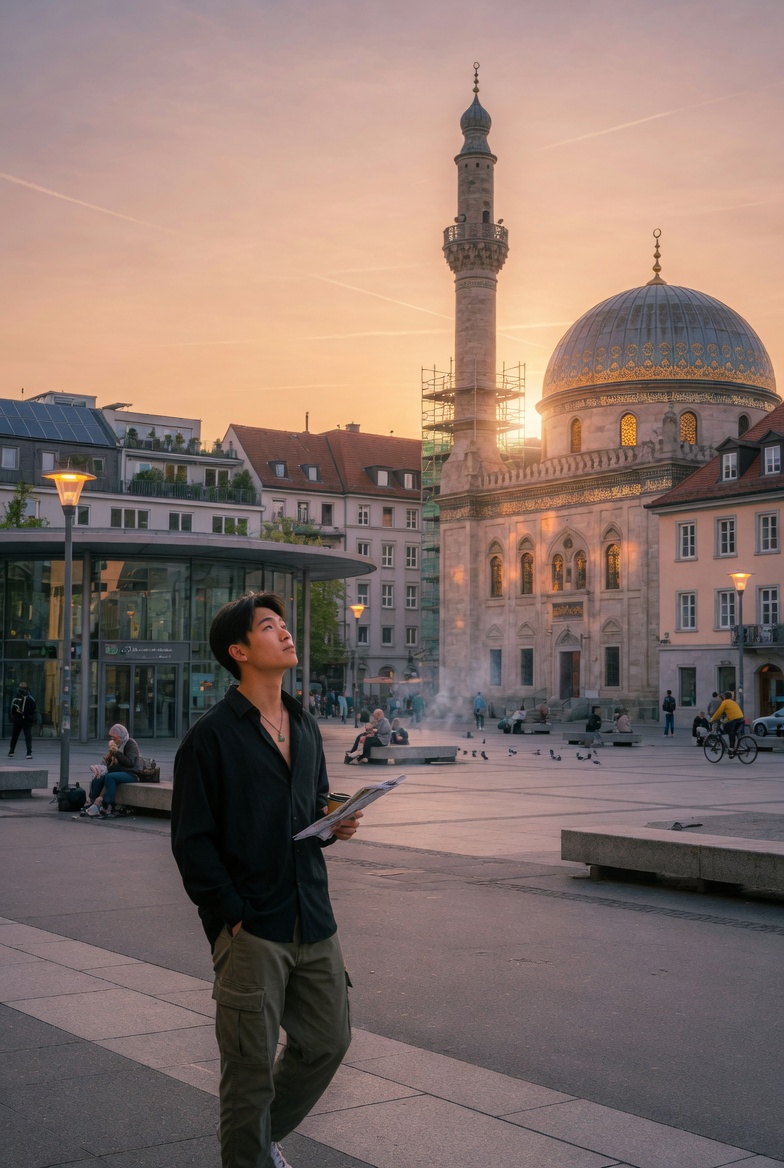
In recent years, researchers and sociologists have observed a significant shift in the religious landscape of the West, with Islam emerging as the fastest-growing faith in Europe. But what is driving this change? To understand this trend, we explore the personal journey of Isa, a former magician of Chinese descent who found peace in Islam. By delving into Isa’s life story, we aim to uncover the underlying reasons—from the search for genuine purpose to the intellectual appeal of Islamic theology—that led him toward this path.
Why Modern Seekers are Turning to Islam
In today’s fast-paced, secular society, the definition of success has become increasingly tied to material wealth, career status, and external validation. Many people feel that this hyper-materialistic approach leaves a void, failing to address the deeper, more meaningful aspects of the human experience. As a result, there is a growing search for a clear, logical framework to answer life’s most fundamental questions regarding existence and the hereafter—a structure many are finding within the teachings of Islam.
A primary driver of this shift is the concept of Tawhid, or the absolute oneness of God. This doctrine is frequently cited as a central reason for the conversion trend because of its simplicity and clarity. Unlike more complex theological models, Tawhid offers a straightforward, logical connection between the individual and the Creator, which resonates with those tired of convoluted religious arguments. For individuals like Isa, this transition is not merely a change in religious practice, but a conscious journey to move beyond the pursuit of superficial fame toward a stable, spiritual foundation.
The Role of Community and Solidarity
Beyond theology, the sense of community plays a vital role. Many who convert to Islam emphasize the feeling of solidarity and unity they experience when praying shoulder-to-shoulder with others. In a world that can often feel disconnected, this strong communal bond provides a powerful sense of belonging.
Scientific and Historical Interest
A growing number of people are engaging in comparative religious studies. Many converts mention that they were drawn to Islam after examining the historical preservation of the Quran and its scientific claims. For those deeply interested in religious texts, these factors often serve as a “logical anchor” in their conversion process.
Conclusion
he growth of Islam in Europe is a multifaceted phenomenon that cannot be reduced to a single cause. It is a combination of individual spiritual seeking, the desire for a structured community, and an intellectual interest in the religion’s foundational texts.
Regarding the broader social dynamics, many sociologists and policy experts suggest that the influence of any specific religious or ideological movement within a democratic society is best managed through integration rather than suppression.
Strategies to maintain social balance often include promoting social integration by ensuring equal access to education, employment, and community resources to reduce feelings of alienation.
Furthermore, strengthening democratic values and fostering critical thinking through modern education systems helps individuals make informed choices rather than turning toward extreme ideologies.
Additionally, encouraging interfaith dialogue and open communication between different communities can help bridge cultural gaps and reduce misunderstandings.
Since many individuals turn to religion to find purpose and community belonging, secular societies can also mitigate spiritual voids by offering strong communal support networks and emphasizing shared societal values.
Ultimately, fostering an environment of inclusivity, transparency, and education is widely considered the most effective way to address cultural shifts and maintain a cohesive society.
In contrast, some nations have adopted different approaches, such as the Chinese model, which focuses on strict state regulation and the integration of religious practices within a framework that prioritizes national identity and political stability.
While these models emphasize top-down management to maintain social order, they differ significantly from the democratic and pluralistic approaches often favored in European societies, which rely more on individual liberty and communal integration.
Key Terms Explained
- Tawhid: The core Islamic doctrine of the absolute oneness of God, emphasizing that the Creator is unique and indivisible.
- Secular Society: A societal structure where religious and state affairs are separated, often where modern life focuses primarily on material success.
- Hyper-materialistic: A lifestyle or perspective where success is measured solely by wealth, fame, and material possessions.
- Socio-Cultural Analysis: A method of understanding societal shifts by examining behaviors, community needs, and collective beliefs rather than just statistics.
- Integration: The process of including diverse communities into the mainstream of society through equal access to education, employment, and rights.
- Democratic Values: Principles such as individual liberty, equality, and the rule of law that serve as the foundation for inclusive societies
Leave a Reply